
Search

Sign In Join Free



1 / 4
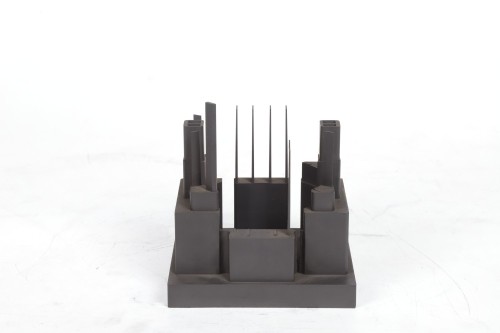
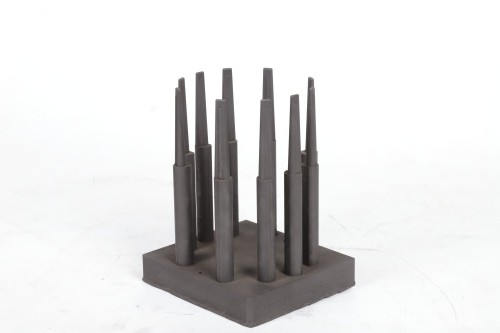
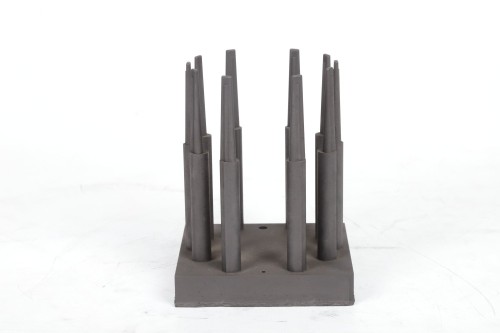
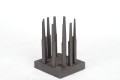
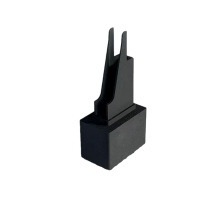
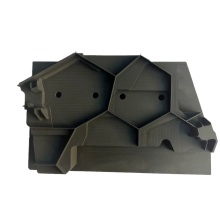
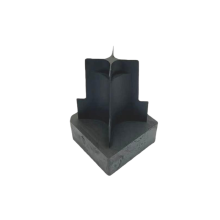
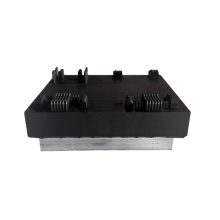
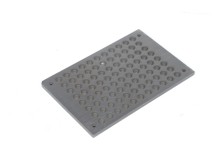
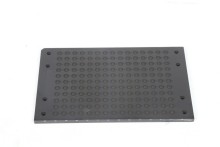
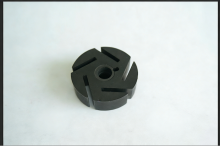
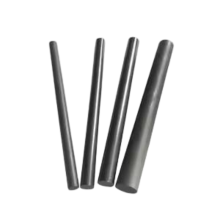
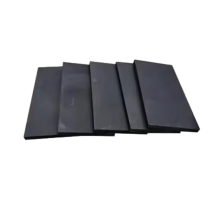
Customized Graphite Electrodes In Multiple Specifications
Get Latest Price
You might also like




Basic Info
| Brand Name | DongMei |
|---|---|
| place of origin | China |
| species | Electrode Block |
| grade | Rp (Regular Power) |
Product description
1. Material Composition
The core material of custom graphite electrodes is high-purity graphite (carbon content ≥99%), whose basic raw material is usually petroleum coke or needle coke (carbon content ≥98%), which is calcined at high temperatures (2500-3000℃) to form a graphitized structure. Some high-end products add carbon fibers, metal particles (such as copper, nickel), or anti-oxidation coatings (such as boron nitride) to improve conductivity, thermal stability, or corrosion resistance. For example, UHP (ultra-high power) electrodes require needle coke to ensure low resistivity (≤5.5μΩ·m) and high mechanical strength (flexural strength ≥11MPa).
?
2. Application Areas
Steel Smelting: Accounting for 70%-80% of global consumption, used in electric arc furnaces (EAF) and refining furnaces (LF) to melt scrap steel and alloy raw materials at high temperatures (3000-3600℃) using an electric arc.
?
Non-ferrous Metal Smelting: Used as a conductor to transfer current during the electrolysis or smelting of metals such as aluminum, copper, and silicon.
?
Chemical Industry: Used in the electrolytic production of chlor-alkali, yellow phosphorus, etc., relying on the chemical corrosion resistance of graphite electrodes.
?
Emerging Fields: Dual-ion Batteries (DIB): Graphite is used as the positive electrode material, achieving high energy density (>300Wh/kg) and fast charging (80% charge within 15 minutes) through anion intercalation.
?
3D Printing and Semiconductors: Customized high-precision graphite electrodes for laser sintering or photolithography processes.

?
3. Specifications and Types
By Power Rating:
RP (Standard Power): Diameter 50-600mm, resistivity ≤8.5μΩ·m, suitable for small electric arc furnaces.
?
HP (High Power): Diameter 300-700mm, resistivity ≤6.5μΩ·m, used in medium-sized steel mills.
?
UHP (Ultra-High Power): uhp graphite electrode diameter 400-800mm, resistivity ≤5.5μΩ·m, suitable for large electric arc furnaces (capacity >100 tons/furnace).
?
By Size:
Diameter: Standard range 50-1200mm; extra-large diameters (e.g., 800mm) require custom molds.
Length: 1500-3600mm; long electrodes (>3000mm) require segmented design to avoid transportation damage.
?
Special Structures:
Threaded Connectors: Ensure electrode connection stability and reduce contact resistance.
Hollow Structure: For processes requiring cooling or gas protection.

?
4. Customization Options
Material Formulation Adjustment:
Adding carbon fiber (5%-10%) improves thermal shock resistance, suitable for electric arc furnaces with frequent start-stop cycles.
Coating with an antioxidant layer (e.g., SiC) extends service life (by 20%-30%).
?
Custom Size and Shape:
Non-standard Diameters: such as 900mm, 1000mm, require redesigned extrusion molds.
Irregular Cross-sections: such as hexagonal electrodes, optimize current distribution.
?
Customized Performance Parameters:
Resistivity: Controlled by adjusting the graphitization temperature (2800-3000℃), low resistivity models are suitable for high-current applications.
Density: Increasing the compaction density (1.7-1.8 g/cm3) enhances mechanical strength.
?
Surface Treatment:
Machining: High-precision polishing (surface roughness Ra≤0.8μm) meets semiconductor industry requirements.
Anti-oxidation Treatment: Impregnation with borate solution enhances high-temperature oxidation resistance.
?
5. Industry Trends and Case Studies
Case 1: A steel mill customized UHP650x2700mm electrodes, using a needle coke + 5% carbon fiber formula, reducing electrode consumption per ton of steel by 15%.
?
Case 2: A dual-ion battery company customized porous graphite electrode, achieving rapid anion intercalation through optimized porosity (30%-40%), increasing cycle life by 50%. Trends: With the increasing proportion of electric arc furnace steelmaking (over 30% globally), the demand for UHP electrodes is growing by 8% annually; the demand for high-purity, customized graphite electrodes in the new energy sector is growing rapidly.



Customized Graphite Electrodes In Multiple Specifications
Get Latest Price
Send your inquiry to this supplier
You may also be interested in
- graphite electrodes
- Graphite welding electrodes
- carbon graphite electrodes
- chinese graphite electrodes
- rp graphite electrodes
- used graphite electrodes
- supply graphite electrodes
- offer graphite electrodes
- impregnated graphite electrodes
- graphite electrodes scrap
- broken graphite electrodes
- drycell graphite electrodes
- HP Graphite Electrodes
- UHP Graphite Electrodes
- ip graphite electrodes
Product Categories
New products




Send Inquiry
Product Alert
Subscribe to your interested keywords. We will send freely the latest and hottest products to your Inbox. Don't miss any trade information.
Subscribe
Your use of this website constitutes acknowledgement and acceptance of our Terms & Conditions.
Copyright ? 2009-2026 Bossgoo Co., Ltd. All rights reserved.
