
Search

Sign In Join Free



Video
1 / 2
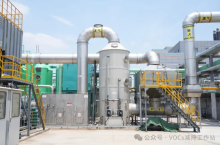
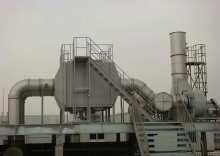
Efficient Odor treatment device 4
Get Latest Price
You might also like


Basic Info
Product description
Deodorization treatment device deodorization
Relying on the strong R&D investment and extensive professional knowledge in various fields of universities, Zechuan can provide users with customized solutions based on their needs. For deodorization (odor removal) solutions, Zechuan can offer the following flexible processes: chemical washing process and biological treatment process.
?
Chemical Scrubber Deodorization
The principle of a chemical scrubber mainly relies on the composition of the malodorous gas. It uses chemical agents such as strong acids (sulfuric acid), strong bases (sodium hydroxide), and strong oxidants (sodium hypochlorite) as the scrubber spray solution to come into gas-liquid contact with the malodorous gas molecules in the gas, thereby transferring the malodorous components in the gas phase to the liquid phase. And the odor substances are removed through neutralization, oxidation or other chemical reactions between chemical agents and the odor components. Chemical washing methods can be applied to treat odorous substances, including organic sulfur compounds, nitrogen-containing compounds, organic acids, oxygen-containing hydrocarbons, halogenated compounds and other waste gas substances. It is suitable for use in sludge treatment, food, petroleum, chemical, pharmaceutical and other industries.
?
1. Scrubber tower
The commonly used equipment is a packed scrubber tower. Chemical absorption liquid is sprayed from the top of the tower downward, and the waste gas flows upward. The malodorous gas fully contacts and reacts with the absorption liquid and is thus removed. The ratio of the absorption liquid to the exhaust gas flow rate (liquid/gas ratio) is generally 1-3 L/m 3, and the gas empty tower flow velocity is generally 0.5-1m/s.
?
2. Chemical absorbent
Commonly used chemical absorbents include the following types: alkaline solution/acidic solution/sodium hypochlorite solution
?
Alkaline absorption solutions commonly used are solutions containing 1-10% sodium hydroxide, which are very effective in eliminating hydrogen sulfide. For other substances that often cause odors in wastewater treatment plants, such as methyl mercaptan, methyl sulfide, dimethyl sulfide, and low-level fatty acids, this method can achieve excellent treatment results.
?
Acid washing is mainly used to eliminate odors caused by alkaline gases such as ammonia and trimethylamine. Generally, sulfuric acid (a solution of 0.5-5%) is often used as the washing solution.
?
Sodium hypochlorite is generally used together with acidic or alkaline absorption solutions. For methyl sulfide that is difficult to eliminate by other methods, the control effect of sodium hypochlorite absorption solution is very good. When treating high-concentration odors from sewage treatment plants, the concentration of sodium hypochlorite solution (effective chlorine concentration) is approximately 500-2000ppm. When dealing with lower-concentration odors, sodium hypochlorite solution with a concentration of approximately 50-500 PPM is used. In terms of the performance of various oxidants, sodium hypochlorite is the cheapest and has a good effect, so it is the most commonly used.
?
Sodium hypochlorite in solution exists in the form of hypochlorous acid (HOCl) :NaOCl+ H2O→HOCl+ NaOH...... At pH 7.5, the available chlorine in hypochlorite solution exists in the form of 50% HOCI and hypochlorite ions (OCl-). At pH=10, only 0.3% of available chlorine exists as HOCl. At pH 11 or 12, HOCl almost completely dissociates into useless hypochlorite ions, so pH value control is very important.
?
Plant liquid enhances washing and deodorization
The diluted plant extract in the storage tank is lifted by the circulating pump to the sprayer in the washing container for spraying. The sprayed liquid is returned to the storage tank through the packing layer and then recycled by the circulating pump. The induced draft fan draws the malodorous gas into the washing container through the collection pipeline. After the malodorous gas is evenly distributed by the air distribution plate, it moves in the opposite direction with the spray liquid into the packing layer. The airflow is cut and distributed in multiple directions and fully contacts and reacts with the diluted plant extract on the surface of the packing. At this time, the flow rate of the malodorous gas is slow, and the residence time in the container is long, forming a semi-liquid phase. The surface of the filler with plant extract liquid forms a filtering effect on it. The malodorous gas flowing out of the filler layer is washed by the spray liquid and then discharged through the exhaust port, thus eliminating the odor.
?
Natural plant liquid is a highly effective deodorant. After reacting with the scrubber, the content of odors such as hydrogen sulfide and ammonia will be reduced by more than 95%. Therefore, this process is widely applicable to deodorization in various sewage treatment plants (stations), garbage transfer stations, landfill sites, composting plants, sludge storage areas and other places, as well as for waste gas purification in production workshops of petroleum, chemical, synthetic rubber, pharmaceutical, food processing, papermaking and other industries.
?
Biological Deodorization technology
The biofiltration deodorization process adopts the "microbial" degradation technology. It utilizes deodorizing microorganisms growing on the filter material to degrade H2S, SO2, NH3 and most volatile organic malodorous substances, with a deodorization rate that can reach 98-99%. The biofilm formation and adjustment were carried out using the superior strain cultivated and domesticated by Tongji University, which features a short biofilm formation period and good treatment effect. The system has a lifespan of over 10 years and can operate normally outdoors within a temperature range of -20℃ to 40℃. It can operate throughout the year, running continuously for 24 hours a day, and its treatment process does not cause secondary pollution. The processing system is mainly made of fiberglass reinforced plastic, which has good corrosion resistance.
?
The core of the biological deodorization system consists of high-efficiency biological filter (pool) towers, composite fillers conducive to the attachment and growth of microorganisms, and dominant microbial strains. Under suitable environmental conditions, microorganisms in the filter (pool) tower form a biofilm on the surface of the packing material. They utilize the inorganic and organic substances in the waste gas as carbon sources and energy, maintain their life activities by degrading malodorous substances, and decompose malodorous substances into odorless substances such as water, carbon dioxide and minerals, achieving the purpose of purifying malodorous gases.
?
The biodegradation process includes
1. Gas-liquid diffusion stage: Malodorous gas substances are adsorbed or absorbed by the microorganisms on the packing material within the organisms and transferred from the gas phase to the biological phase.
?
2. Liquid-solid diffusion stage: The malodorous gas substances come into contact with the water on the surface of the biofilm, the packing material of the biological filter (tank) tower, and dissolve in water. They are transferred from the gas phase to the liquid phase of water. The H2S dissolved in the water is adsorbed by the organisms perched on the packing material and transferred from the liquid phase to the biological phase.
?
3. Biological oxidation stage: The microorganisms in the biofilm formed on the surface of the biological filler feed on the malodorous gas substances. The malodorous substances and VOCS are oxidized and decomposed by the microorganisms. During the transformation process, energy is generated, providing energy for the growth and reproduction of the microorganisms, ensuring the continuous transformation of the malodorous gas substances.
?
The main object of action
Malodorous inorganic gases: including hydrogen sulfide, ammonia, mercaptans, sulfides, etc.
?
Non-volatile malodorous organic gases: organic benzene, toluene, chlorobenzene, low-level aliphatic hydrocarbons, alcohols, aldehydes, etc.
?
Volatile malodorous organic compounds: sulfur-containing organic compounds (mercaptans, sulfides), nitrogen-containing organic compounds (amines, amides), oxygen-containing organic compounds (alcohols, ethers, ketones, aldehydes), as well as hydrocarbons (aliphatic hydrocarbons and aromatic hydrocarbons) and halogen organisms, etc.



Video
Promotional video
Promotional video
Promotional video
Efficient Odor treatment device 4
Get Latest Price
Send your inquiry to this supplier
You may also be interested in
- armpit odor removal
- car odor removal
- odor removal sticker
- commercial odor removal
- shoes odor removal
- removal system
- industrial mold removal
- Hair Removal System
- grit removal system
- tatto removal system
- tattoo removal system
- manure removal system
- condensate removal system
- ethylene removal system
- dust removal system
Product Categories
New products
Send Inquiry
Product Alert
Subscribe to your interested keywords. We will send freely the latest and hottest products to your Inbox. Don't miss any trade information.
Subscribe
Your use of this website constitutes acknowledgement and acceptance of our Terms & Conditions.
Copyright ? 2009-2026 Bossgoo Co., Ltd. All rights reserved.
