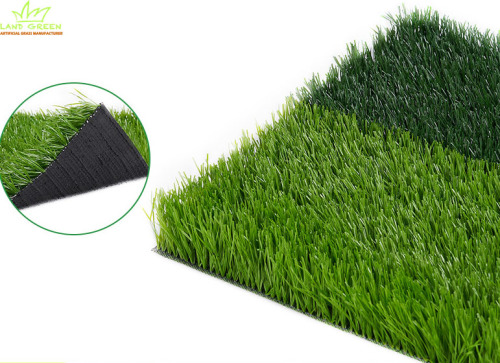
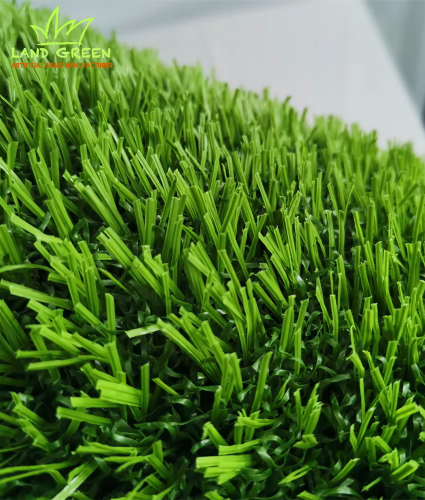
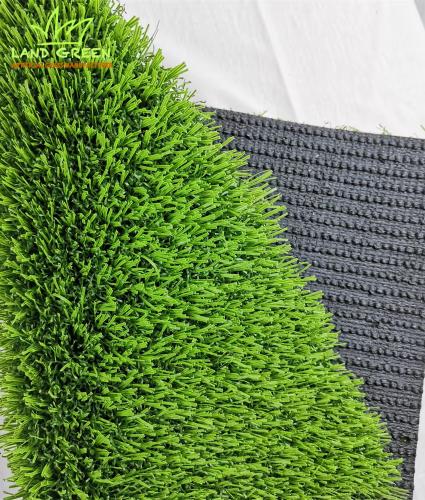
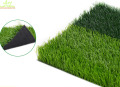
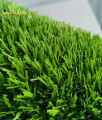
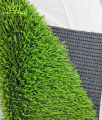
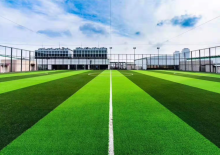
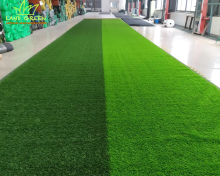
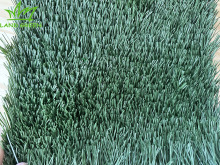
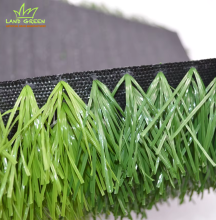
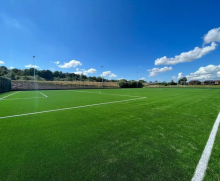
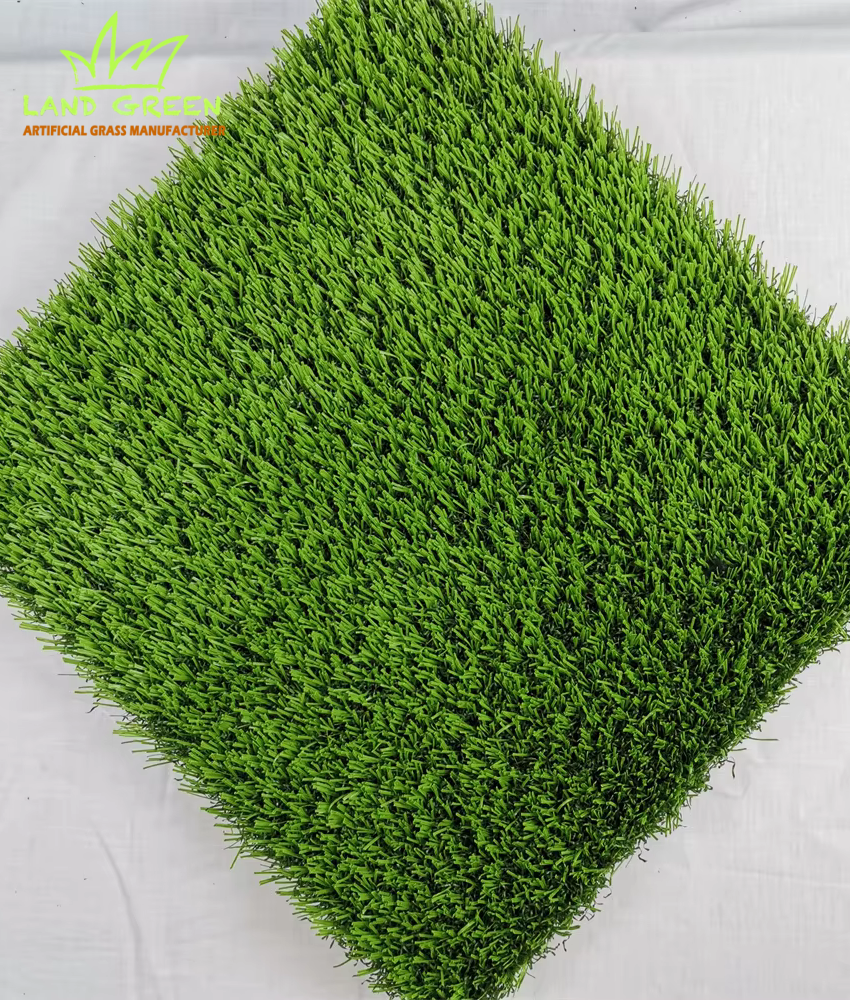
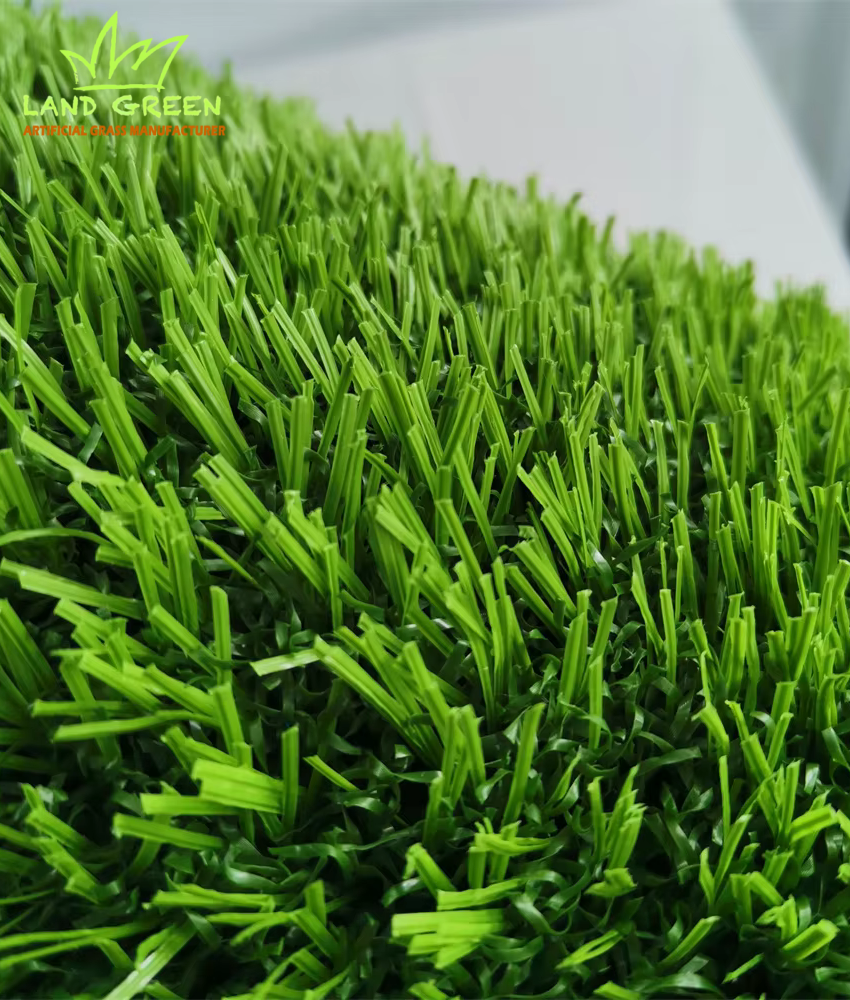
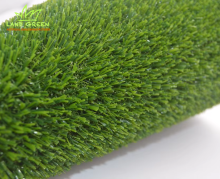
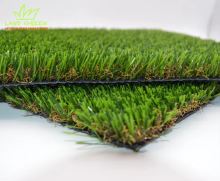
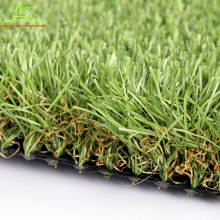
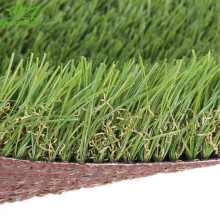
The core feature of unfilled artificial turf soccer grass is that it does not require the filling of quartz sand and rubber particles. It relies on high-density grass fibers and special structural design to achieve self-supporting, combining environmental friendliness, low maintenance costs, and good athletic performance.
?
?Non filling artificial turf soccer grass
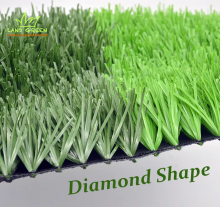
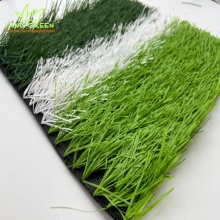
Advanced structural design: using high-density tufting (up to 21000 needles/square meter or more) and special cross-sectional fibers (such as S-shaped and W-shaped curved fibers), allowing grass fibers to stand upright independently without the need for filling support. The bottom is often equipped with an elastic shock-absorbing layer to enhance cushioning performance and protect athletes' joints.
?
Environmentally friendly, safe and pollution-free: does not use rubber particles (which may contain heavy metals) and quartz sand, avoiding the risk of particle splashing, loss or ingestion, especially suitable for children's activity areas such as kindergartens and schools. At the same time, reducing the diffusion of microplastics is more in line with the safety requirements of the new national standard GB/T35610-2017 for public places.
Extremely low maintenance cost: eliminates the need for tedious maintenance processes such as regular filling and sorting of solidified particles. Daily cleaning only requires rinsing with clean water or soft brushing, significantly reducing labor and long-term operating costs.
?
Excellent drainage performance: The bottom porous design combined with unfilled structure allows rainwater to quickly penetrate vertically, avoiding water accumulation and achieving all-weather use.
Easy to install and mobile: Construction is as simple as laying a carpet, with a short construction period. Due to the lack of fillers, some products support overall movement or disassembly, making them suitable for temporary venues or rooftop sports fields.
Strong durability and long service life: High quality unfilled lawns can have a service life of 5-8 years, and the materials are mostly weather resistant polyethylene (PE) or polypropylene (PP), which are resistant to ultraviolet rays and not easy to fade