

Sign In Join Free




Video
1 / 7
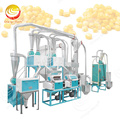
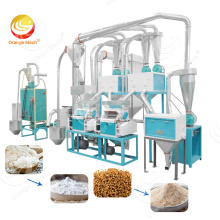
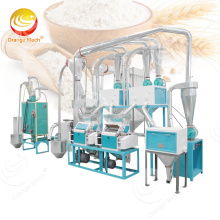
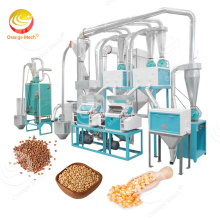
ORME Flour Process Plant: Full Automatic 100t Flour Grinding Milling Machine - Wheat Flour Milling Line
$20000.00
≥1 set
$15000.00
≥10 set
Options:
- orangemech-MMM-14D




Basic Info
| Place Of Origin | Henan, China |
|---|---|
| Brand Name | orangemech |
| Production capacity | Customizable |
| voltage | 380V |
| Power(W) | 32.8kw |
Product description
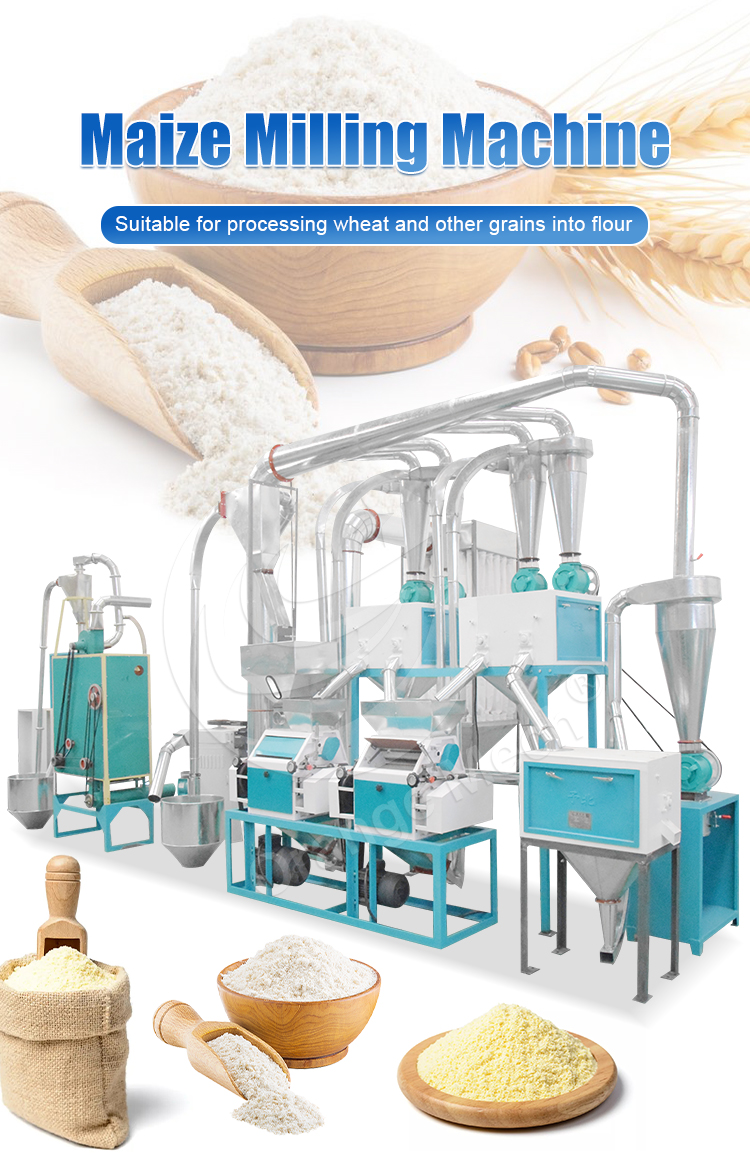
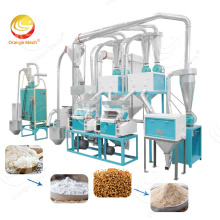
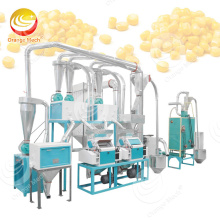
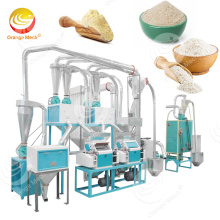
The flour production line begins with the cleaning of raw grains to remove impurities. By adjusting the moisture content, the inner and outer states of the wheat grains are improved. Subsequently, grinding and sieving are carried out to separate the bran and endosperm, and the flour is cleaned to improve purity. Finally, mix the flour as needed, accurately weigh and package it, and produce qualified flour products.
Application
Flour production lines are mainly used in the grain processing industry to process wheat into various flour products. Its flour is widely used in the baking industry to make bread and cakes; It is also used for making pasta, such as noodles and Mantou; It is also used in the food industry to produce frozen food, instant noodles, etc.
Features
1. Efficient production: With a high degree of automation, it can operate continuously, greatly improving flour production efficiency and meeting large-scale market demand.
3. Product diversity: By adjusting the process, flour with different precision and uses can be produced to meet various needs such as baking and pasta.
4. Energy saving and environmental protection: adopting advanced technology to effectively reduce energy consumption and dust emissions, in line with the concept of green production.
Video
30 Ton per Day Flour Milling Machine - ORME 5tpd 120tpd 150tpd Wheat Maize Milling Machine China1
30 Ton per Day Flour Milling Machine - ORME 5tpd 120tpd 150tpd Wheat Maize Milling Machine China1
30 Ton per Day Flour Milling Machine - ORME 5tpd 120tpd 150tpd Wheat Maize Milling Machine China1
ORME Flour Process Plant: Full Automatic 100t Flour Grinding Milling Machine - Wheat Flour Milling Line
$20000.00
≥1 set
$15000.00
≥10 set
Options:
- orangemech-MMM-14D
Send your inquiry to this supplier
You may also be interested in
- maize milling
- maize flour milling machine
- maize meal milling machine
- Maize Milling Machines
- maize milling line
- maize milling machinery
- maize milling production
- Maize Milling Equipment
- maize milling grinder
- maize milling plant
- maize flour milling
- maize milling mahicne
- Maize machine
- maize flour milling equipment
- maize flour milling machinery
Product Categories






Product Alert
Subscribe to your interested keywords. We will send freely the latest and hottest products to your Inbox. Don't miss any trade information.
Your use of this website constitutes acknowledgement and acceptance of our Terms & Conditions.
Copyright ? 2009-2026 Bossgoo Co., Ltd. All rights reserved.
