
Search

Sign In Join Free











Video
1 / 8
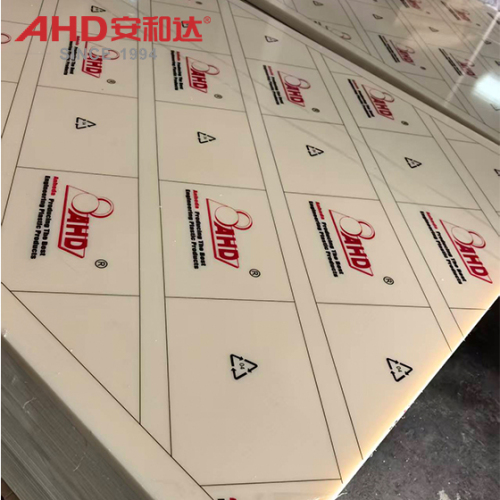
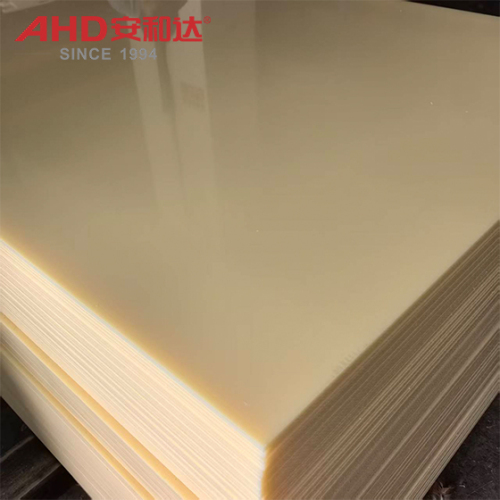
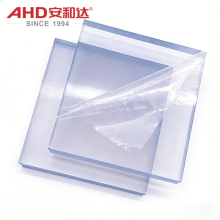
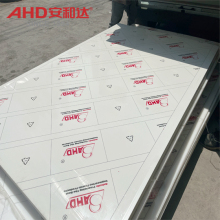
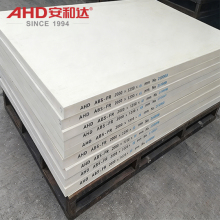
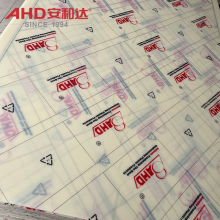
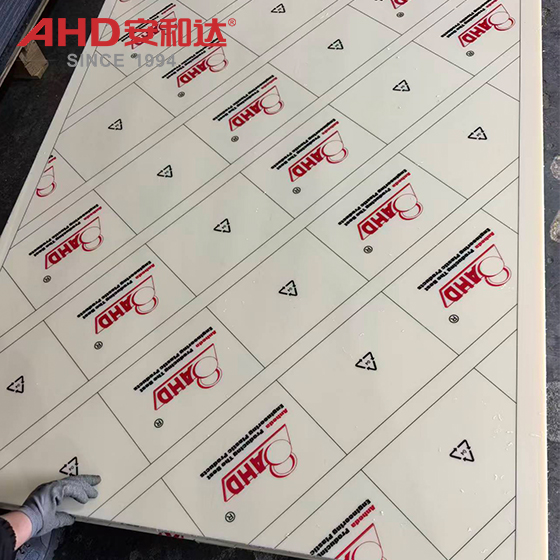
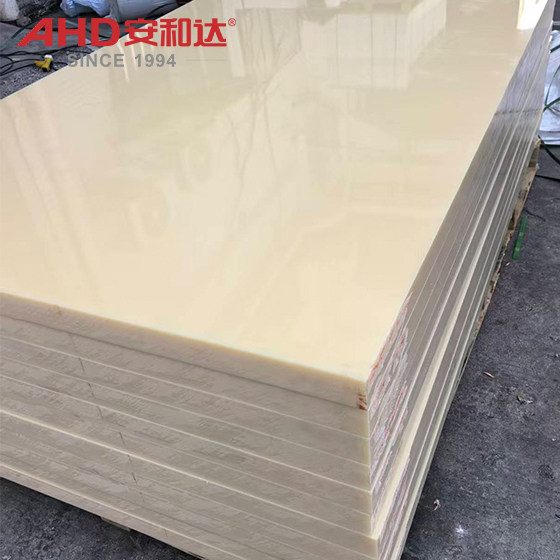
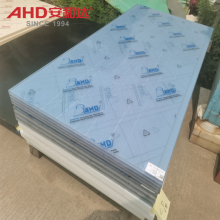
Beige ABS Plastic Sheet with protective film
Get Latest Price
You might also like





Basic Info
| Model No. | AHD-ABS Sheet |
|---|---|
| Brand Name | AHD |
| place of origin | China |
| Processing Service | Cutting, Moulding |
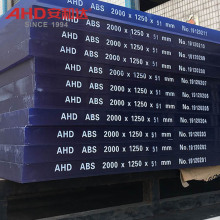
| Thick (mm) | 1--260 |
| Size (mm) | 1250*2000 /1250*1000 |
| Color | Beige / Black / White / Clear |
Product description
ABS sheet is an engineering plastic with outstanding comprehensive performance, truly a “jack-of-all-trades.” It is a terpolymer of acrylonitrile (rigidity), butadiene (toughness), and styrene (processability), combining high strength with impact resistance—its impact strength at room temperature far exceeds that of ordinary plastics, making it resistant to cracking from drops or collisions. Its surface is smooth and mirror-like, allowing direct printing, spraying, or electroplating for effortless finishing. Exceptional dimensional stability ensures minimal warping or deformation over time, unaffected by temperature and humidity fluctuations.
?
Notably versatile, it serves as equipment guards and instrument panels in industrial settings; as lightbox bases and display stands in signage; as ideal materials for phone cases and printer housings in electronics; and as cabinet dividers, storage boxes, or DIY creative models in home applications. It also boasts outstanding chemical resistance (withstands weak acids and alkalis), easy workability (effortless cutting, drilling, and bonding), and a rich color palette (customizable in transparent, matte, and vibrant hues), offering far superior value compared to metal or acrylic. Whether prioritizing functionality or aesthetics, ABS sheet effortlessly delivers. Let us introduce our ABS Plastic Sheet to you!
?
?
?
Ⅰ. Core Characteristics and Advantages of ABS Sheets
?
The exceptional performance of ABS sheets stems from its terpolymer molecular structure, which organically combines the rigidity of acrylonitrile, the toughness of butadiene, and the processability of styrene. This creates a balanced mechanical profile characterized by toughness, hardness, and rigidity. Specific advantages are reflected in the following aspects:
?
1.? Superior Mechanical Properties: ABS sheet exhibits exceptionally high impact strength, maintaining excellent impact resistance even in low-temperature environments without brittle fracture. It also boasts outstanding mechanical strength and rigidity, high surface hardness, scratch resistance, and minimal deformation. This enables it to withstand prolonged external impacts and friction wear, significantly extending its service life beyond ordinary plastic sheets.
?
2.? Exceptional Processability: ABS sheets can be processed through various methods including shearing, die-cutting, thermoforming, and welding, accommodating demands ranging from simple sheet cutting to complex custom part fabrication. Its stable shrinkage rate of 0.4%-0.7% ensures high dimensional accuracy, making it ideal for mass-producing standardized components.
?
3. Stable Environmental Adaptability: ABS sheets exhibit low water absorption, maintaining consistent performance in humid conditions. They possess excellent chemical resistance, withstanding corrosion from most common acids, alkalis, and salts. Operating temperatures range from -50°C to +70°C, accommodating diverse industrial and residential environments. Additionally, their superior electrical insulation properties make them suitable for manufacturing insulating components in electronics and appliances.
?
4. Diverse functional expandability: Through technical modification, ABS sheets can be developed into various functional products such as flame-retardant ABS (FR ABS Sheet), PC+ABS (PC ABS Sheet), and anti-static ABS (ESD ABS Sheet). Furthermore, ABS sheets can be easily dyed or painted, and their surfaces can be processed to mimic natural textures, combining decorative appeal with functionality.
?

?
?
Ⅱ. How to make high-quality ABS Sheet?
?
Producing high-quality ABS sheets requires meticulous management throughout the entire process—from raw material selection and process control to post-processing. Below are the core steps and key considerations:
?
Key Steps for Producing High-Quality ABS Sheets
?
1. Raw Material Selection and Formulation Design
?
Base Resin: Select high-purity ABS resin (acrylonitrile-butadiene-styrene copolymer). Adjust monomer ratios based on requirements (e.g., increasing butadiene for enhanced toughness, acrylonitrile for greater rigidity).
?
Additive Incorporation: Incorporate flame retardants as needed, ensuring excellent compatibility among all components to prevent segregation.
?
Raw Material Pre-treatment
ABS exhibits a balanced moisture absorption rate of approximately 0.3-0.5%. Pre-drying is essential: Forced-air drying at 80-90°C for 2-4 hours until moisture content <0.1% to prevent bubbles and silver streaks during processing.
?
2. Processing Method (Primarily Extrusion)
?
Plasticizing Extrusion: Use single/twin-screw extruders with zoned barrel temperature control (feed section: 160-180°C, compression section: 180-210°C, homogenization section: 200-230°C, die head 210-220°C) to avoid decomposition due to overheating (ABS decomposition temperature >250°C). Maintain stable screw speed (10-30 rpm) to ensure uniform melt plasticization.
?
Mold forming: Use an adjustable-width die head with smooth, dead-angle-free flow channels to prevent material stagnation and decomposition. Ensure uniform die lip gap (corresponding to sheet thickness) and calibrate initial extrusion.
?
Cooling and Setting: Employ a multi-roll calender (three-roll or five-roll). Heat the top roll (60-80°C), cool the middle and bottom rolls (20-40°C), and control cooling rate (excessive speed causes warping; insufficient slows efficiency). Match traction speed to extrusion volume (prevent overstretching or shrinkage).
?
Post-Processing
Cutting: Cut to specified lengths with clean, burr-free edges.
Annealing (Optional): Hold at 80-100°C for 2-4 hours to relieve internal stresses and minimize subsequent deformation.
?
?
?
Key Considerations
?
Raw Material Quality Control: Avoid using recycled materials (containing impurities or degraded substances). Ensure consistent performance across new material batches.
?
Precise Temperature Control: Barrel/die head temperature deviation ≤5℃. Overheating causes yellowing and decomposition gases, affecting appearance and performance.
?
Equipment Maintenance: Regularly clean screws/barrels (prevent carbon buildup), inspect roller surface wear (scratches cause sheet surface defects); evenly tighten die bolts to prevent uneven extrusion.
?
Cooling and Traction Coordination: Maintain reasonable cooling roller temperature gradients (e.g., upper layer slightly higher than lower layer), ensure stable traction tension (avoid sheet thinning or wrinkling).
?
Environmental Cleanliness: Control workshop dust to prevent foreign particles causing surface spots or performance degradation.
?
Quality Inspection: Test each batch for thickness tolerance, surface gloss, tensile strength, impact strength, etc. Isolate non-conforming products immediately.
?
The core of premium ABS sheet lies in “pure raw materials, optimized formulations, stable processes, and controllable details.” Strictly manage critical parameters like moisture content, temperature, and cooling rates, ensuring consistent performance through testing.
?
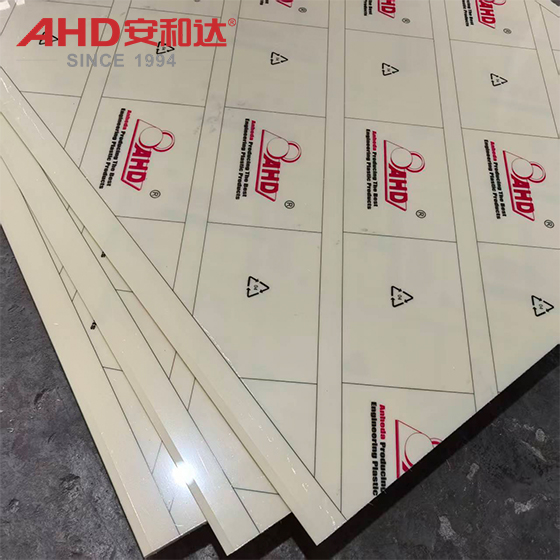
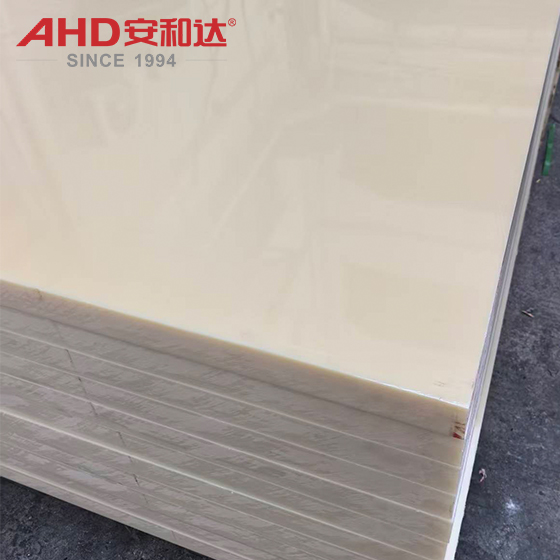
AHD, with 31 years of dedicated plastic sheet and rod production, possesses extensive experience and specialized expertise in ABS sheet manufacturing. We currently offer beige, black, white, and transparent ABS sheets in thicknesses ranging from 1 to 260 mm. Custom sizes and colors are welcome!
?
?
?
Ⅲ. ABS Compatibility with CNC Machining: Why Choose ABS?
?
ABS's molecular structure—acrylonitrile provides chemical resistance, butadiene enhances toughness, and styrene ensures rigidity—grants it unique machining advantages, making it stand out in CNC applications:
?
1.? Ease of Machining: Reduces processing costs
?
ABS's moderate hardness (Rockwell R75–110) minimizes tool wear during cutting, making it suitable for high-speed machining.
Low cutting forces reduce equipment load and extend tool life.
?
2. Dimensional Stability: Ensures Machining Precision
?
ABS exhibits low shrinkage and a small thermal expansion coefficient (approximately 7×10??/℃). Post-CNC machining dimensional tolerances can be controlled within ±0.05mm (±0.02mm achievable with precision machining).
Moderate moisture absorption eliminates the need for prolonged pre-processing drying, minimizing deformation risks from water absorption.
?
3. Surface Quality: Reduces Post-Processing Steps
?
ABS produces ribbon-like or granular chips during cutting, minimizing tool adhesion. Its surface roughness is low (Ra 0.4–1.6 μm) and can reach Ra 0.1 μm after polishing (approaching injection-molded part quality).
?
It achieves uniform appearance without additional coatings (e.g., painting), making it suitable for applications demanding high surface texture quality (e.g., consumer electronics housings).
?
4. Cost Advantage: Cost-Effective and Suitable for Batch Processing
?
ABS raw material is inexpensive;
High processing efficiency (short single-piece forming time) makes it suitable for small-batch prototyping (e.g., hand-held models) or large-scale production (e.g., industrial fixtures).
?
?
?
?
?
?
When CNC machining ABS sheets, the core principle is to reduce defects by mitigating material limitations and optimizing the machining process. Key considerations are as follows:
?
1. Material Pre-treatment: Pay attention to hygroscopicity and heat sensitivity.
?
Moisture and dust prevention: Although hygroscopicity is not high, prolonged exposure to damp environments may cause surface softening. Check the sheet condition before machining and gently blow away dust if necessary to ensure dryness.
?
Avoid high-temperature softening: ABS has generally low thermal stability. During machining, it is crucial to prevent localized overheating (such as heat generated by tool friction) to avoid material softening, tool sticking, or deformation.
?
2. Tool Selection: Prioritize sharp and suitable carbide tools.
?
Choose carbide material: It is more resistant to friction and temperature rise than high-speed steel, reducing the frequency of dulling; avoid using dull tools to compress the material.
?
Geometric parameters for chip removal and drag reduction: Appropriately increase the rake angle to reduce cutting resistance, leave sufficient clearance angle to avoid friction, use a high helix angle for chip removal, and keep the cutting edge sharp (slight dulling can prevent chipping).
?
Select diameter according to machining requirements: Small-diameter tools are used for fine contours, while large-diameter tools are used for roughing (to reduce vibration). III. Machining Process: Heat Control, Force Control, and Chip Control
?
Parameter Balance: Roughing prioritizes efficiency (medium-high speed + higher feed, rapid removal of excess material), finishing prioritizes surface finish (higher speed + lower feed, small depth of cut for precision); avoid excessive depth of cut in a single pass (vibration prevention, delamination).
?
Clamping to Prevent Deformation: ABS has weak rigidity; avoid overly tight clamping—use soft clamps (rubber pads, copper sheets) or vacuum adsorption to disperse pressure on thin plates; when using a bench vise on thick plates, ensure uniform clamping force to prevent warping or crushing.
?
Accurate Positioning in One Go: Use the edge of the sheet metal and pre-drilled holes as references; for complex parts, use "one-sided, two-pin" positioning to reduce repeated clamping errors.
?
ABS sheet with protective film




Video
Beige ABS Sheet
Beige ABS Sheet
Beige ABS Sheet
Beige ABS Plastic Sheet with protective film
Get Latest Price
Send your inquiry to this supplier
You may also be interested in
Product Categories
New products
Send Inquiry
Product Alert
Subscribe to your interested keywords. We will send freely the latest and hottest products to your Inbox. Don't miss any trade information.
Subscribe
Your use of this website constitutes acknowledgement and acceptance of our Terms & Conditions.
Copyright ? 2009-2026 Bossgoo Co., Ltd. All rights reserved.
