
Search

Sign In Join Free


1 / 1
Bug Screen?
Get Latest Price
You might also like

Basic Info
Product description
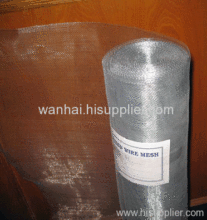
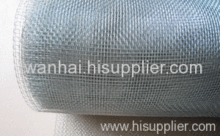
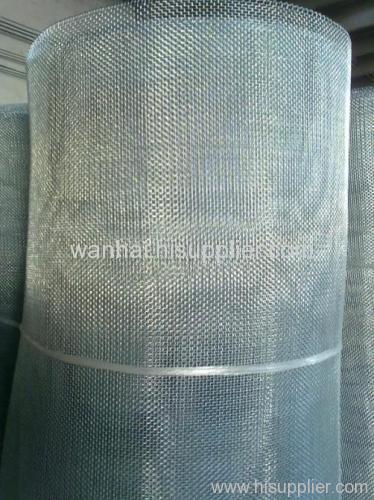
A window screen, insect screen or bug screen is a metal wire, fiberglass, or other synthetic fiber mesh, stretched in a frame of wood or metal, designed to cover the opening of an open window. Its primary purpose is to keep insects, leaves, debris, birds, and other animals from entering a building or a screened structure such as a porch, while permitting fresh air-flow. Most houses in Australia, the United States and Canada have screens on all operable windows, which are most useful in areas that have large mosquito populations. Formerly, screens in North America were usually replaced with glass storm windows in the winter, but now the two functions are usually combined in combination storm and screen windows, which allow glass and screen panels to slide up and down.
The window screens to deny mosquitos are called mosquito screens, and the ones for denying flies would be named fly screens.
The most common materials used for insect screening material are aluminum and fiberglass. Aluminum is generally available in natural aluminium or in an applied charcoal color; the charcoal is much less visible. Fiberglass is available in light gray as well as charcoal colors, the charcoal again offering better viewing and appearance. Fiberglass is less expensive, and has the advantage of not "denting" when hit or pushed. However, the fiberglass mesh is somewhat more opaque than aluminum mesh, which darkens the external appearance of the window and reduces the amount of light transmitted from outside. In addition, fiberglass screen degrades rapidly with exposure to UV light, leading to it fraying and breaking after just a few years], unlike aluminum which lasts considerably longer.
For applications requiring greater strength, such as screened doors, nylon, and polyester screening is also available.
Bronze insect screening is much more expensive, but gives much longer service than either aluminium or fiberglass. When first installed, it has a bright gold color; this weathers to an unobtrusive dark charcoal within a year or less. Bronze is somewhat more resistant to denting than aluminium. Less common screen fabrics include copper, brass, stainless steel, and galvanized steel.
In addition to insect screening, denser screen types that also reduce sunlight and heat gain are available. These offer significant potential energy savings in hot climates.
The fineness of a screen mesh is measured in wires per inch on the warp (length) and the weft or filler (width). An 18×14 mesh has become standard; 16×16 was formerly common and other common sizes are 18×18 and 20×20.
Some screens can provide over 75% of UV protection, at the cost of decreased visibility.
Finer mesh is used near water, where very small insects are found.
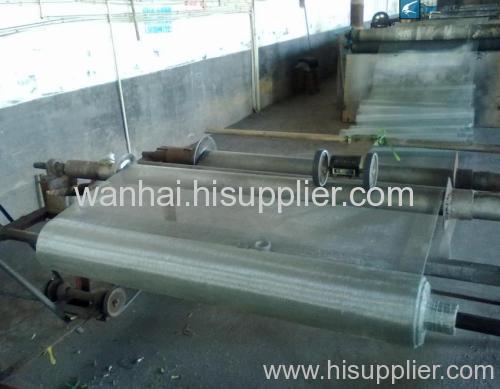
For screens installed on aluminium frames, the material is cut slightly larger than the frame, then laid over it, and a flexible vinyl cord, called a spline, is pressed over the screen into a groove (spline channel) in the frame. The excess screen is then trimmed close to the spline with a sharp utility knife. Common spline sizes range from .140″ to .190″, in increments of .010″.
The spline is often manufactured with parallel ridges running along the length of the spline to provide a better grip and compliance when it is pressed into the channel. A spline roller?— a special tool that consists of a metal wheel on a handle?— is used to press the spline into the frame. The wheel edge is concave, to help it hold the spline and not slip off to the side. Some spline rollers are double-ended and have both convex and concave rollers; the convex roller can be used to seat the spline deeper into the channel without risk of cutting the screen. Driving the spline into the channel tends to tension the screen on the frame, so the installer must avoid pre-tensioning the screen excessively to prevent the frame from becoming warped.
When installed using wooden frames, the screen fabric is tacked or stapled onto the frame. A narrow wooden molding is then nailed over the ragged edge. The screening fabric needs to be stretched tightly before nailing, but not so tightly as to deform the fabric.
Because of corrosion problems with dissimilar metals, metal screening fabrics other than aluminium are not used in aluminium frames.

ANPING COUNTY WANHAI METAL PRODUCTS TRADING CO., LTD.
- 12yrs
Hengshui,
Hebei,
China
- Manufacturer
- OEM service
Bug Screen?
Get Latest Price
Send your inquiry to this supplier
You may also be interested in
- fiberglass insect screening
- PVC insect screening
- phiferglass insect screening
- various insect screening
- wire insect screening
- insect proof screening
- insect screening series
- Plastic Insect Screening
- Aluminum Insect screening
- fibreglass insect screening
- Enamelled Insect screening
- bronze insect screening
- insect screening netting
- Insect Screening Weaving
- Insect Screening machine
Product Categories
New products




Send Inquiry
Product Alert
Subscribe to your interested keywords. We will send freely the latest and hottest products to your Inbox. Don't miss any trade information.
Subscribe
Your use of this website constitutes acknowledgement and acceptance of our Terms & Conditions.
Copyright ? 2009-2026 Bossgoo Co., Ltd. All rights reserved.
