
Search

Sign In Join Free


1 / 5
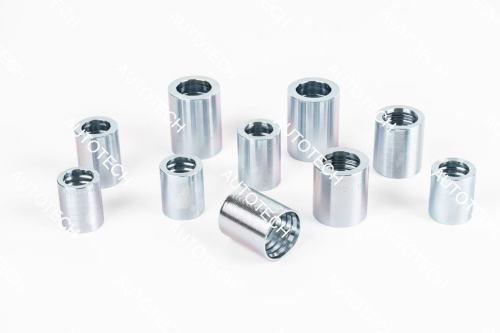
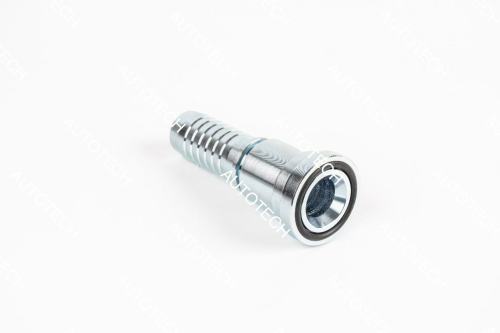
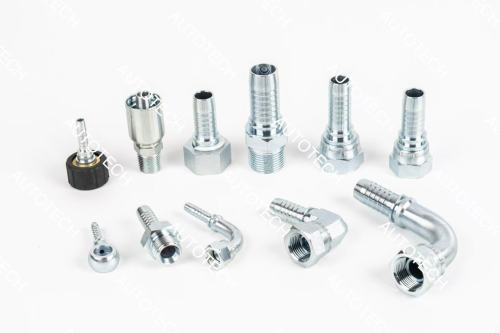
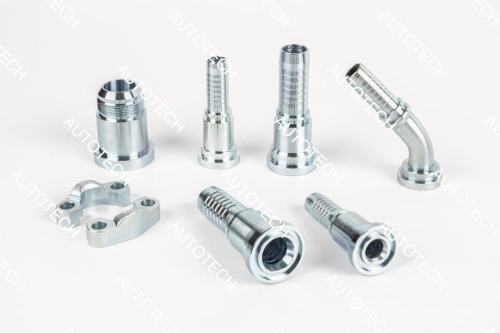
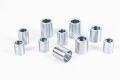
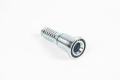
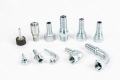
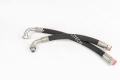
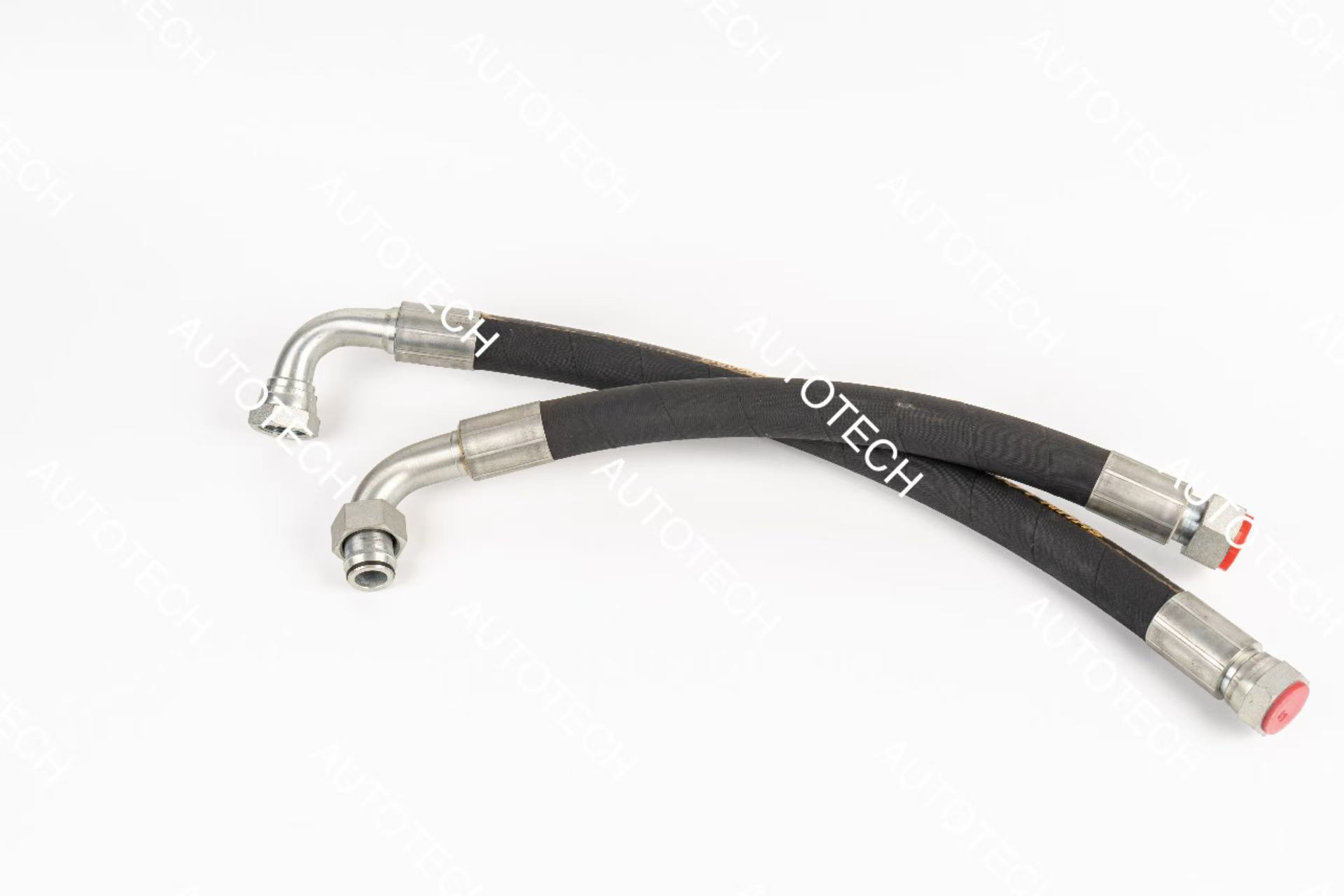
Galvanized Carbon Steel Hydraulic Hose Fittings
Get Latest Price
You might also like

Basic Info
| Material | Carbon Steel |
|---|---|
| Producing Process | Stamping +galvanizing |
| Usage | Used where industrial joints are required |
Product description
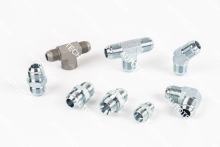
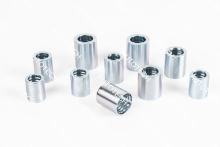
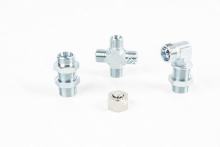
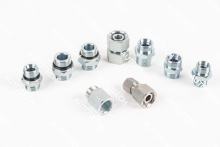
Galvanized Carbon Steel Hydraulic Hose Fittings: Secure Connections for Global Industrial Hydraulic Systems
?
In the realm of specialty coffee, the art of milk texturing is the key to elevating a good espresso to an extraordinary one. The Full-Machined AISI 316 Steam Wand Tip stands as a critical performance component, serving as the final bridge between a commercial espresso machine's steam system and the milk, dictating the quality of microfoam that defines signature lattes, cappuccinos, and flat whites. For the most demanding cafe environments where consistency and durability are non-negotiable, this steam wand tip is not just a part—it’s a game-changer for baristas pursuing perfection.
The manufacturing of hydraulic connection components encompasses a diverse spectrum of processes, with Steel Investment Casting, Ductile Iron Sand Casting, Aluminum Casting, Forging, Machining, and stamping/cold-forming catering to varying volume, complexity, and performance demands. Each method has its distinct application scope: Steel Investment Casting and Forging excel in producing low-volume, complex-shaped, or ultra-high-pressure fittings; Ductile Iron Sand Casting offers cost benefits for medium-batch heavy-duty components; Aluminum Casting is suitable for lightweight, corrosion-sensitive but lower-pressure scenarios; and Machining is utilized for high-precision, small-batch parts. However, when it comes to high-volume production of standardized hydraulic hose fittings—where mass manufacturability, mechanical strength, cost-effectiveness, and corrosion resistance are paramount—these conventional processes fall short. Steel Investment Casting and Machining are inefficient and costly for large-scale production, Ductile Iron Sand Casting lacks the dimensional uniformity required for standardized connections, and Aluminum Casting cannot match the mechanical strength of carbon steel for high-pressure hydraulic applications.
What sets Galvanized Carbon Steel Hydraulic Hose Fittings apart is their highly optimized Process Design, tailored exclusively for the global high-volume hose assembly market. Manufactured from robust carbon steel via high-volume Stamping and cold-forming processes, followed by a uniform Galvanizing coating, this Process Design abandons the inefficiencies of traditional methods. It overcomes the high cost and low-volume limitations of Steel Investment Casting and Forging, the dimensional inconsistency of Ductile Iron Sand Casting, the insufficient strength of Aluminum Casting, and the inefficiency of Machining for mass production. The high-volume Stamping and cold-forming processes ensure consistent geometry and exceptional mechanical strength across every fitting, guaranteeing a tight, leak-free seal with hydraulic hoses. Meanwhile, the uniform Galvanizing coating provides superior environmental corrosion resistance, protecting the fittings from harsh conditions in industrial, mobile, and agricultural environments. This optimized Process Design achieves the perfect balance of mass production efficiency, mechanical performance, cost-effectiveness, and durability.
Guided by this meticulous Process Design, every attribute of Galvanized Carbon Steel Hydraulic Hose Fittings is engineered for peak performance in diverse hydraulic applications. The robust carbon steel base material delivers exceptional mechanical strength, outperforming Aluminum Casting alternatives and matching the strength of Forged or Steel Investment Casting components without the associated high costs. The uniform Galvanizing coating ensures long-term corrosion resistance, surpassing uncoated Steel Investment Casting parts and Ductile Iron Sand Casting components in harsh environments. Their standardized dimensions, precision-formed through Stamping and cold-forming, ensure universal compatibility with hydraulic hoses and system components, avoiding the fitment issues common in Machined high-volume parts or Ductile Iron Sand Casting products. Moreover, the high-volume manufacturing enabled by this Process Design ensures consistent quality across batches, making these fittings a reliable choice for global hose assembly manufacturers and end-users alike.
For global industrial enterprises, mobile equipment manufacturers, agricultural machinery producers, and hose assembly contractors that prioritize efficiency, cost-effectiveness, and reliability, Galvanized Carbon Steel Hydraulic Hose Fittings are an indispensable choice. They stand as a testament to how thoughtful Process Design, paired with high-volume Stamping, cold-forming, and Galvanizing technologies, outshines traditional manufacturing methods like Steel Investment Casting, Ductile Iron Sand Casting, Aluminum Casting, Forging, and Machining in high-volume, standardized hydraulic connection applications. With these fittings, industries can trust in secure, leak-free hydraulic connections that meet rigorous performance requirements, reduce procurement costs, and ensure long-term operational stability. In the world of hydraulic systems, where reliable connections are the lifeline of productivity, Galvanized Carbon Steel Hydraulic Hose Fittings are the definitive choice for high-volume, durable hydraulic hose terminations.
?
?
Product Features:
Robust Construction with Protective Finish: The core material, carbon steel, is selected for its excellent strength-to-cost ratio and suitability for high-volume forming.
Robust Construction with Protective Finish: The core material, carbon steel, is selected for its excellent strength-to-cost ratio and suitability for high-volume forming.
?
Galvanized Corrosion Defense: A hot-dip or electro-galvanized zinc coating is applied post-forming. This provides a robust, sacrificial barrier against rust and corrosion caused by exposure to moisture, humidity, outdoor weather, and incidental hydraulic fluid or coolant spills. This protection is essential for extending service life in real-world conditions, a key advantage over uncoated (black) carbon steel fittings.
?
Mechanical Strength for High-Pressure Service: The inherent strength of carbon steel, often enhanced by the work-hardening effects of the stamping process, allows these fittings to meet the pressure ratings required for industrial and mobile hydraulic systems. They are designed to withstand both system operating pressure and impulse fatigue.
High-Efficiency Production via Stamping and Forming: The majority of components in a reusable hose fitting - such as the stem, ferrule (collar), and socket - are produced using high-speed Stamping and precision cold-forming.
High-Efficiency Production via Stamping and Forming: The majority of components in a reusable hose fitting - such as the stem, ferrule (collar), and socket - are produced using high-speed Stamping and precision cold-forming.
?
Unmatched Production Volume and Consistency: Stamping utilizes progressive dies to transform steel coil or wire into precise shapes at extremely high speeds. This ensures exceptional part-to-part dimensional consistency, which is absolutely critical for the reliable assembly and sealing of hydraulic hoses. The uniformity achieved often surpasses that possible with Ductile Iron Sand Casting for these specific geometries.
?
Superior Economic and Material Efficiency: As a near-net-shape process, stamping generates minimal material waste compared to subtractive methods like Machining. Combined with a high degree of automation, this makes it the most cost-effective Process Design for producing the millions of hose fitting components required globally. This efficiency directly enables the widespread availability and affordability of hose assemblies.
?
Precision-Formed Sealing Surfaces: The critical 37° JIC flare seating surfaces, sealing cones, and serrated hose barb profiles can be formed directly in the die with high accuracy. Secondary operations like thread rolling or cutting are then used to finalize the connection ends (e.g., NPT, BSP, SAE).
Versatile Hose Attachment Methods: These fittings are designed for use in both reusable and permanently crimped hose assembly systems.
Versatile Hose Attachment Methods: These fittings are designed for use in both reusable and permanently crimped hose assembly systems.
?
Reusable (Field-Attachable) Design: The fitting typically consists of a separate stem, ferrule, and socket. When assembled onto a properly skived hose end and tightened, the ferroll deforms to grip the hose wire reinforcement, creating a powerful mechanical lock and a seal against the stem.
?
Crimp Style: The fitting stem and an integral or separate ferrule are designed to be permanently attached to the hose using a hydraulic crimping machine, providing a compact, high-integrity assembly.
Contrast with Alternative Manufacturing Methods: The selection of stamping + galvanizing is a deliberate and economically sound Process Design strategy.
Contrast with Alternative Manufacturing Methods: The selection of stamping + galvanizing is a deliberate and economically sound Process Design strategy.
?
Vs. Forging: Forging produces parts with superior grain flow and impact strength, making it the preferred method for the highest-pressure, most critical fittings (e.g., SAE J518 four-bolt flange adapters). However, for the vast majority of standard hose ends, the strength provided by stamped and work-hardened carbon steel is fully adequate at a significantly lower cost.
?
Vs. Machining: Machining a hose fitting from solid bar stock would be prohibitively slow, wasteful, and expensive for high-volume production. Stamping is the dominant process for its ability to produce the necessary shapes efficiently.
?
Vs. Steel Investment Casting: Investment casting is excellent for complex, low-volume manifolds but cannot compete with the speed and unit cost of stamping for simple, rotationally symmetric fitting bodies.
?
Vs. Aluminum Casting: Aluminum lacks the strength for hydraulic pressure applications and is incompatible with the galvanizing process. Its use is typically limited to low-pressure air or water hose fittings.
?
Usage Scenarios:
These fittings are ubiquitous across all sectors utilizing hydraulic power:
Mobile Hydraulic Equipment: Connecting hoses on construction machinery (excavators, bulldozers), agricultural equipment (tractors, combines), forestry machinery, and mining trucks.
Industrial Manufacturing: Forming hose assemblies for machine tools, plastic injection molding presses, steel mill equipment, and material handling systems.
Transportation: Used in trucking (dump truck cylinders, trailer lift gates), refuse collection vehicles, and heavy-duty truck power steering systems.
Marine and Offshore: Applicable in winch systems, hydraulic steering, and deck machinery on vessels (with attention to saltwater corrosion limits of galvanizing).
MRO (Maintenance, Repair, and Operations): The primary component for field repair, replacement, and fabrication of new hydraulic hose assemblies in maintenance shops worldwide.
?
Target Audience and Benefits:
Primary Audience:
? ?Hydraulic Hose Assembly Technicians and Shop Managers
? ?Mobile Equipment Mechanics and Fleet Managers
? ?Industrial Maintenance Personnel
? ?OEMs of Hydraulic Equipment and Machinery
? ?Distributors of Fluid Power Components
?
Key Audience Benefits:
Cost-Effective Reliability: This is the paramount benefit. The stamped and galvanized Process Design delivers a component that is both affordable and reliable. It provides a durable, pressure-rated connection that prevents costly leaks and downtime without the premium price tag of stainless steel or specially Forged fittings.
Corrosion Resistance for Extended Service Life: The galvanized coating is a critical feature for any equipment operating outdoors or in damp industrial environments. It significantly slows rust formation, preventing thread seizure, maintaining the integrity of sealing surfaces, and extending the interval between hose assembly replacements.
Simplified Inventory and Assembly: The standardized design and high availability of these fittings in common thread types and sizes (JIC, NPT, ORFS, etc.) simplify inventory management for hose shops and maintenance departments. The reusable designs allow for quick field assembly and repair with simple hand tools (wrenches, vise, cutter), minimizing equipment downtime.
Proven Performance Under Pressure: The design of the fitting-to-hose interface (e.g., the bite of the ferrule on the hose reinforcement) is a time-tested technology that provides excellent resistance to blow-off under high pressure and impulse, ensuring system safety and reliability.
Global Availability and Interchangeability: As commodity items produced in massive volumes, these fittings are available from countless suppliers worldwide. This ensures that replacement parts can be sourced quickly, keeping equipment operational.
Versatility Across Applications: Available in straight, 45°, 90°, and swivel configurations, they provide the flexibility to route hose lines cleanly and efficiently in tight machine spaces, reducing stress on the hose and improving system neatness and serviceability.
?



?



Galvanized Carbon Steel Hydraulic Hose Fittings
Get Latest Price
Send your inquiry to this supplier
You may also be interested in
Product Categories
New products




Send Inquiry
Product Alert
Subscribe to your interested keywords. We will send freely the latest and hottest products to your Inbox. Don't miss any trade information.
Subscribe
Your use of this website constitutes acknowledgement and acceptance of our Terms & Conditions.
Copyright ? 2009-2026 Bossgoo Co., Ltd. All rights reserved.
版權(quán)所有 ? 寧波全貿(mào)信息技術(shù)有限公司 浙ICP備12012821號-1 浙B2-20200628
