

Sign In Join Free


Video
1 / 2
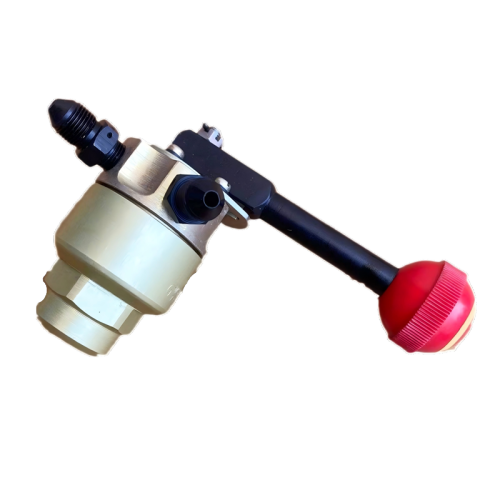
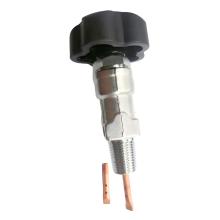
Military Aviation Hand Valve QSF-2B




Basic Info
| Model No. | QSF-2B |
|---|---|
| Brand Name | YM |
Product description
Military Aviation Hand Valve QSF-2B
Precision Manual Flow Control for Combat Aircraft Systems
Product Overview
The Military Aviation Hand Valve QSF-2B is a rugged, manually operated shut-off and metering valve engineered for demanding aircraft fluid systems. Designed specifically for combat and high-performance aircraft, it provides reliable isolation and flow regulation for fuel, hydraulic, pneumatic, and environmental control systems. As a key component in YM's comprehensive aviation fluid control portfolio—which includes the Aviation Valve T-5T, Cold Air Solenoid Valve QDF-42A, and Aviation Temperature Sensor ZWH-2—the QSF-2B delivers precision manual operation with military-grade durability in extreme environments.

Technical Specifications
- Model: QSF-2B Military Aviation Hand Valve
- Type: Manually operated, quarter-turn or multi-turn (selectable configuration)
- Body Material: Corrosion-resistant aluminum alloy (anodized) or stainless steel
- Seal Material: Fluorocarbon (FKM) / PTFE for fuel, hydraulic fluid, and pneumatic compatibility
- Pressure Rating: 0 to 3000 psi (20.7 MPa) maximum operating pressure
- Temperature Range: -54°C to +135°C (MIL-STD-810 compliant)
- Port Connection: MS33656 or AN fitting threads (customizable)
- Flow Coefficient (Cv): 0.8 to 2.5 depending on port size
- Leakage Rate (External): ≤ 1.0 × 10?3 Pa·cm3/s (helium leak test)
- Internal Leakage (Seat): Zero detectable leakage per MIL-V-5526
- Operating Torque: ≤ 3.5 N·m (smooth, consistent feel)
- Cycle Life: 10,000 mechanical cycles minimum
- Weight: Under 250 grams (optimized for aerospace weight savings)
- Compatibility: Works with systems using Hydraulic Filter MQL-5 15MPA and Oxygen value QF-21A.
Complete dimensional drawings, torque curves, and pressure-drop data available in the product datasheet.
Product Features & Competitive Advantages
- Military-Grade Environmental Resilience: Designed to withstand extreme vibration, shock, altitude changes, and temperature fluctuations per MIL-STD-810, matching the durability of other mission-critical components like the Aviation Hand Valve YSF-1A.
- Precision Flow Control: Smooth, progressive actuation allows fine metering for sensitive aircraft systems such as cockpit air conditioning or fuel cross-feed.
- Superior Sealing Technology: Advanced PTFE/FKM seals and metal-to-metal backup ensure zero leakage even after extended service, critical for Aviation Oxygen Valve applications.
- Ergonomic & Safe Operation: Large, textured handle with clear position indicator (open/closed) enables operation with gloved hands. Locking feature prevents accidental movement in high-vibration environments.
- Lightweight & Compact: Optimized aluminum body reduces weight without sacrificing burst pressure strength – essential for modern combat aircraft weight budgets.
- Corrosion & Fluid Compatibility: Anodized finish and internal coatings resist hydraulic fluid (MIL-PRF-83282), jet fuel (JP-8), and pneumatic system contaminants.
Installation & Operation Steps
- Pre-Installation Inspection: Verify valve body, ports, and handle are free from damage or debris. Check that seal materials are compatible with system fluid.
- Mounting: Secure the valve using the provided mounting lugs or bracket. Do not over-torque – follow specified fastener torque values.
- Tube/Fitting Connection: Connect upstream and downstream lines using appropriate flareless or flare fittings. Apply thread sealant (Loctite 567 or equivalent) on tapered threads.
- Functional Check: Turn handle fully clockwise to “CLOSED” position. Apply system pressure and check for external leakage. Slowly open to “OPEN” position and verify flow.
- Position Marking (Optional): Mark handle position relative to body for quick visual reference in operational use.
- Operational Use: To operate, grasp handle and rotate to desired position. For quarter-turn versions, stop at mechanical stops. For multi-turn, count turns if precise metering is required.
- Integration with Sensors: For systems requiring flow monitoring, the QSF-2B can be paired with a pressure transducer hydraulic or industrial pressure transducer downstream to provide feedback.
Application Scenarios
The QSF-2B hand valve is deployed across multiple aircraft and ground support systems where manual override or isolation is required:
- Combat Aircraft Fuel Systems: Manual shut-off for cross-feed valves, fuel transfer, and refueling/defueling points.
- Hydraulic Systems (Flight Controls & Landing Gear): Isolation of hydraulic circuits during maintenance or emergency procedures.
- Environmental Control System (ECS): Manual regulation of bleed air for cockpit temperature control and anti-ice systems.
- Pneumatic Starting Systems: Isolation of air supply to starter motors on auxiliary power units (APU).
- Ground Support Equipment (GSE): Manual control of hydraulic or pneumatic test stands used with Aviation Temperature Sensor GWR-1 for engine testing.
- Helicopter Rotor Brake & Cargo Hook Systems: Manual hydraulic locking and release functions.
- Missile Launch Platforms: Safe isolation of pressurized systems prior to loading/unloading.
Value Proposition for Procurement Teams
- Enhanced Mission Readiness: Reliable manual valve reduces unscheduled maintenance due to leakage or seizing, ensuring aircraft availability.
- Reduced Lifecycle Costs: 10,000-cycle mechanical life and corrosion-resistant materials lower replacement frequency and total ownership cost.
- Simplified Supply Chain: Source the QSF-2B from YM – a trusted manufacturer of complementary components such as Electronic Horn and aviation light sensor systems – for consistent quality.
- Accelerated Certification: Designed to meet MIL-V-5526 and MIL-STD-810 requirements, supporting your aircraft or subsystem qualification efforts.
- Technical Documentation: Complete data packages including material certifications, test reports, and 3D CAD models provided for seamless integration.
Certifications & Compliance
The QSF-2B is designed and manufactured to meet or exceed the following military and aviation standards:
- MIL-V-5526 – Valves, Manual, Shut-Off and Regulating, General Specification
- MIL-STD-810 – Environmental Engineering Considerations (Vibration, Shock, Temperature, Altitude)
- MIL-STD-461 – EMI/EMC compliance for systems with electronic sensing (when used near aoa sensor aviation or aircraft airspeed sensor).
- AS9100D – Quality management system for aerospace manufacturing.
Each valve is serialized and comes with a certificate of conformance and material traceability.
Customization Options
YM offers tailored configurations of the QSF-2B hand valve to meet specific aircraft or mission requirements, leveraging our expertise in custom fluid control components:
- Port Configurations: Custom thread types (NPT, BSPP, MS, AN) and orientations (inline, 90°, manifold mount).
- Handle Designs: Extended handles, T-handles, or locking levers with optional red/green anodized finish.
- Flow Characterization: Linear or equal-percentage flow profile for metering versions.
- Special Seal Materials: Perfluoroelastomer (FFKM) for aggressive fluids or extreme temperatures.
- Pressure & Temperature Ratings: Up-rated versions for 5000 psi or 200°C applications.
- Integrated Position Sensors: Add micro-switches or hall effect sensor for remote indication of valve status.
Production Process & Quality Assurance
- Material Selection & Verification: Raw materials (aluminum, stainless steel, seals) are certified to aerospace material specifications and tested for chemical composition.
- Precision Machining: CNC turning and milling produce bodies, stems, and handle components with tolerances of ±0.01mm.
- Heat Treat & Surface Finish: Anodizing (Type II or III), passivation, or electroless nickel plating applied per MIL specs.
- Seal Assembly & Lubrication: Seals installed using clean-room practices; lubrication with MIL-PRF-46010 or compatible grease.
- Hydrostatic & Pneumatic Testing: 100% of valves are proof-tested at 1.5× rated pressure and leak-tested using helium mass spectrometer.
- Cycle Testing: Sample units undergo 10,000 mechanical cycles to validate wear and sealing integrity.
- Environmental Validation: Random vibration, thermal shock, and altitude testing per MIL-STD-810 on first article and periodic samples.
- Final Inspection & Documentation: Dimensional inspection, torque verification, and photo documentation. Each valve receives a unique serial number and test report.

- 2yrs

- Manufacturer
- Agent
- Trade Company
Video
Military Aviation Valve
Military Aviation Valve
Military Aviation Valve
Military Aviation Hand Valve QSF-2B
Send your inquiry to this supplier
You may also be interested in
Product Categories




Product Alert
Subscribe to your interested keywords. We will send freely the latest and hottest products to your Inbox. Don't miss any trade information.
Your use of this website constitutes acknowledgement and acceptance of our Terms & Conditions.
Copyright ? 2009-2026 Bossgoo Co., Ltd. All rights reserved.
版權(quán)所有 ? 寧波全貿(mào)信息技術(shù)有限公司 浙ICP備12012821號-1 浙B2-20200628
