
Search

Sign In Join Free




Video
1 / 5
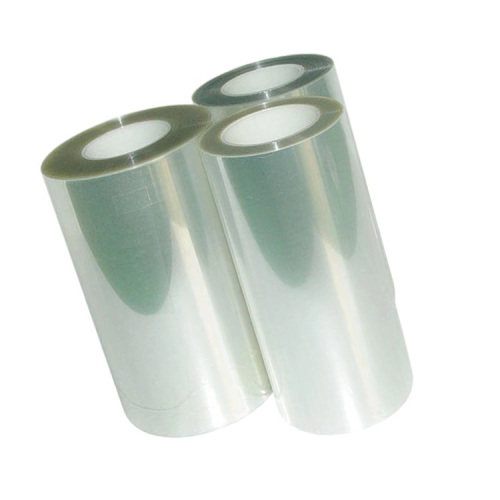
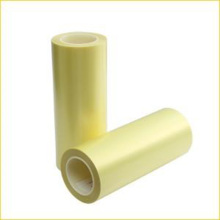
Radiation Cross-linked OCA Film
$0.01
/
Get Latest Price
You might also like



Basic Info
| Model No. | OCA series |
|---|---|
| Brand Name | TTS |
Product description
Radiation Cross-linked OCA Film: Technology, Advantages, and Industrial Applications
1. Introduction to Radiation Cross-linked OCA Films
Optically Clear Adhesive (OCA) films have become indispensable in modern display technologies, bonding cover glasses to touch sensors and display panels in smartphones, tablets, and automotive displays. Among various OCA technologies, radiation cross-linked OCA films represent a significant advancement, offering superior performance characteristics compared to traditional thermally cured adhesives.
?
Radiation cross-linking involves exposing the adhesive material to controlled high-energy radiation, typically electron beams (E-beam) or ultraviolet (UV) light. This process creates a three-dimensional molecular network within the adhesive, dramatically improving its mechanical, thermal, and chemical properties without compromising optical clarity.
?
2. Radiation Cross-linking Technology
2.1 The Science Behind Radiation Cross-linking
The cross-linking process fundamentally alters the polymer structure at the molecular level:
?
High-energy radiation breaks chemical bonds, creating free radicals
?
These radicals form new covalent bonds between polymer chains
?
The resulting 3D network structure enhances material properties
?
2.2 Comparison of Radiation Types
Radiation Type Energy Range Penetration Depth Processing Speed Typical Dose
E-beam 0.5-10 MeV Up to 10 cm Very fast 5-50 kGy
UV 3-6 eV <100 μm Moderate 0.5-5 J/cm2
Gamma 1.17-1.33 MeV Very deep Slow 10-100 kGy
2.3 Material Formulation Considerations
Specialized formulations are required for radiation-curable OCAs:
?
Photoinitiators for UV curing (e.g., benzophenone derivatives)
?
Monomers with radiation-sensitive functional groups
?
Oligomers that promote cross-linking efficiency
?
Stabilizers to prevent post-curing degradation
?
3. Key Advantages of Radiation Cross-linked OCAs
3.1 Enhanced Thermal Stability
Radiation cross-linked films demonstrate remarkable thermal performance:
?
Heat resistance up to 200°C (vs. 120°C for thermal-cured OCAs)
?
Reduced thermal expansion coefficient (CTE <50 ppm/°C)
?
Minimal outgassing at high temperatures
?
3.2 Superior Mechanical Properties
The cross-linked network provides:
?
2-3× higher shear strength
?
Improved creep resistance
?
Better dimensional stability under stress
?
Enhanced resistance to delamination
?
3.3 Optical Performance Benefits
Despite the cross-linking process:
?
Light transmission remains >92% in visible spectrum
?
Haze levels <0.5% maintain display clarity
?
Excellent refractive index matching (1.47-1.52)
?
3.4 Chemical and Environmental Resistance
Cross-linked films show:
?
10× better solvent resistance
?
Improved humidity resistance (85°C/85% RH)
?
Enhanced UV stability for outdoor applications
?
4. Industrial Applications
4.1 Consumer Electronics
Smartphone and tablet displays
?
Foldable display panels
?
High-resolution OLED TVs
?
4.2 Automotive Displays Optical Release Film For Optical Component Manufacturing Industry
Instrument cluster bonding
?
Center stack touch panels
?
Heads-up display systems
?
4.3 Specialized Applications
Military/aerospace displays
?
Medical imaging equipment
?
Outdoor digital signage
?
5. Manufacturing Process
5.1 Production Workflow
Adhesive formulation and mixing
?
Coating onto release liners
?
Precise thickness control (typically 25-500μm)
?
Radiation curing under controlled atmosphere
?
Quality inspection and slitting
?
5.2 Critical Process Parameters
Radiation dose optimization
?
Oxygen exclusion during curing
?
Temperature control during irradiation
?
Post-curing conditioning
?
6. Quality Control and Testing
6.1 Performance Testing
Peel adhesion (ASTM D3330)
?
Shear strength (ASTM D3654)
?
Optical properties (ASTM D1003)
?
Environmental aging tests
?
6.2 Reliability Standards
IPC-9201 for surface insulation resistance
?
MIL-STD-810 for military applications
?
Automotive OEM-specific standards
?
7. Current Challenges and Solutions
7.1 Technical Challenges
Balancing cross-link density with flexibility
?
Maintaining low yellowing index
?
Achieving uniform curing in thick films
?
7.2 Emerging Solutions
Hybrid curing systems (UV + thermal)
?
Advanced photoinitiator systems
?
Nanocomposite formulations
?
8. Future Trends and Developments
Higher performance formulations for foldable displays
?
Sustainable, bio-based materials
?
Smart adhesives with embedded functionalities
?
Industry 4.0-enabled manufacturing processes
?
9. Conclusion
Radiation cross-linked OCA films represent a significant technological leap in display bonding solutions, offering unparalleled performance for demanding applications. As display technologies continue to evolve toward flexible, foldable, and high-resolution formats, radiation-cured OCAs will play an increasingly vital role in enabling these advancements.
?
The combination of superior thermal stability, mechanical strength, and optical clarity makes these materials particularly valuable for automotive, military, and premium consumer electronics applications. Ongoing research in material formulations and curing technologies promises to further enhance their performance and expand their applications.
?
Manufacturers and designers should consider radiation cross-linked OCAs when developing next-generation display systems that require:

Exceptional reliability under extreme conditions
?
Long-term durability
?
Maintenance of optical performance
?
Resistance to environmental stressors
?
As the industry moves toward more sophisticated display technologies, radiation cross-linked OCA films will continue to be at the forefront of adhesive solutions, enabling thinner, lighter, and more durable display constructions.
?
Optical Release Film for Optical Component Manufacturing Industry ensures contamination-free precision molding with its ultra-clean release surface, while High Tear Resistance OCA Film provides durable bonding and crack resistance for complex-shaped lenses and optical filters.
The parameters described in this article are for reference only. For detailed information, please contact our company and refer to the technical specifications provided by us.



Video
Insulating PP Release Film
Insulating PP Release Film
Insulating PP Release Film
Radiation Cross-linked OCA Film
$0.01
/
Get Latest Price
Send your inquiry to this supplier
You may also be interested in
Product Categories
New products




Send Inquiry
Product Alert
Subscribe to your interested keywords. We will send freely the latest and hottest products to your Inbox. Don't miss any trade information.
Subscribe
Your use of this website constitutes acknowledgement and acceptance of our Terms & Conditions.
Copyright ? 2009-2026 Bossgoo Co., Ltd. All rights reserved.
版權(quán)所有 ? 寧波全貿(mào)信息技術(shù)有限公司 浙ICP備12012821號(hào)-1 浙B2-20200628
