
Search

Sign In Join Free




1 / 4
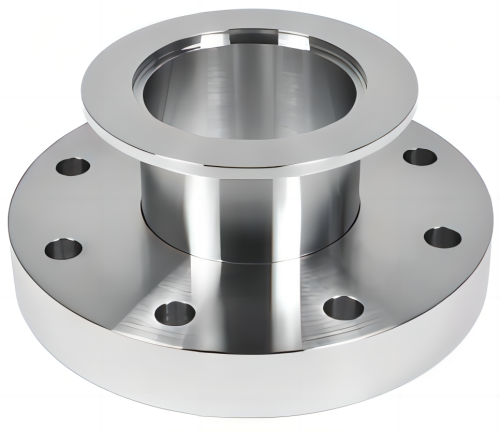
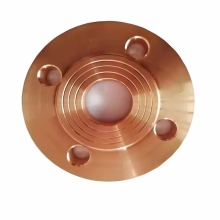
stainless steel special flange
$1.00
~ $10.00
/ Piece/Pieces
Get Latest Price
You might also like



Basic Info
| Brand Name | senoy flange |
|---|
Product description
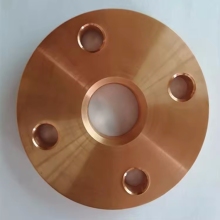
Plate flat welded flange (chemical standard HG20592, national standard GB/T9119, mechanical JB/T81) : convenient materials, simple manufacturing, low cost, widely used; However, the rigidity is poor, so it should not be used for chemical process piping systems with supply and demand, flammable, explosive and high vacuum requirements, and occasions with height and degree hazards. The sealing surface type has a plane and a protruding surface.
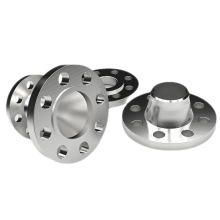
Butt welded flange is a kind of pipe fittings, which refers to the flange with neck and round pipe transition and butt welded with the pipe. Butt welding flange is not easy to deform, sealed well, widely used, has the corresponding rigidity and elasticity requirements and reasonable butt welding thinning transition, the distance between the welding joint and the joint surface is large, and the joint surface is free from welding temperature deformation.
The threaded flange is a kind of non-welded flange that processes the inner hole of the flange into a pipe thread and is connected with a pipe with a thread. Compared with the flat welding flange or butt welding flange, the threaded flange has the characteristics of convenient installation and maintenance, and can be used in some pipelines that are not allowed to be welded on site. Alloy steel flange has enough strength, but it is not easy to weld, or the welding performance is not good, you can also choose threaded flange. However, when the pipe temperature changes sharply or the temperature is higher than 260 ° C and lower than -45 ° C, it is recommended not to use threaded flanges to avoid leakage.
The forged flange is a product with better mechanical properties in the flange products, and its raw materials are generally tube billets, and then they are constantly beaten after cutting to eliminate the segregation, porosity and other defects in the ingot. The price and mechanical properties are a grade higher than ordinary casting flanges. The flange is a part that connects the pipe with the pipe and the valve, and is connected to the end of the pipe; Also useful in the equipment inlet and outlet flange, for the connection between two devices is to make the pipe and pipe connected to each other, connected to the pipe end. It is an accessory product of pipeline. The main materials of forging flange are carbon steel, alloy steel, stainless steel. The main standards are national standard, electrical standard, American standard, German standard, Japanese standard and so on. The main anti-corrosion treatments are oiling and galvanizing. The forged flange has good pressure and temperature resistance, and is generally suitable for high pressure and high temperature working environment.
Neck flange is a proper term, divided into neck flat welded flange and neck butt welded flange. The international standard for pipe flanges can be summarized as two different and non-interchangeable pipe flanges systems.
Large diameter flange is one of the flanges, in the machinery industry, chemical industry, wind power industry, sewage treatment industry is widely used and promoted, get the user's praise and favor, large diameter flange is widely used. The production process is divided into rolling and forging, and the extra large can only be rolled. The material is carbon steel, stainless steel and alloy steel.
Alloy flange is also a material type of flange. It is different from ordinary 20#, Q235 and other carbon steel flanges, mainly used for pipes and pipelines with special characteristics, and mostly used in high temperature and high pressure positions. Its common materials are 12Cr1MoV, 15CrMo, P91, P22, 10CrMo910 and so on.



stainless steel special flange
$1.00
~ $10.00
/ Piece/Pieces
Get Latest Price
Send your inquiry to this supplier
You may also be interested in
Product Categories
New products


Send Inquiry
Product Alert
Subscribe to your interested keywords. We will send freely the latest and hottest products to your Inbox. Don't miss any trade information.
Subscribe
Your use of this website constitutes acknowledgement and acceptance of our Terms & Conditions.
Copyright ? 2009-2026 Bossgoo Co., Ltd. All rights reserved.
版權(quán)所有 ? 寧波全貿(mào)信息技術(shù)有限公司 浙ICP備12012821號-1 浙B2-20200628
