
Search

Sign In Join Free





1 / 6
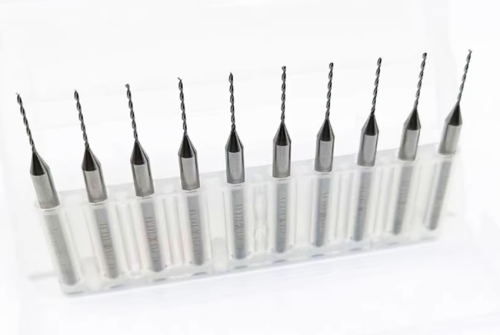
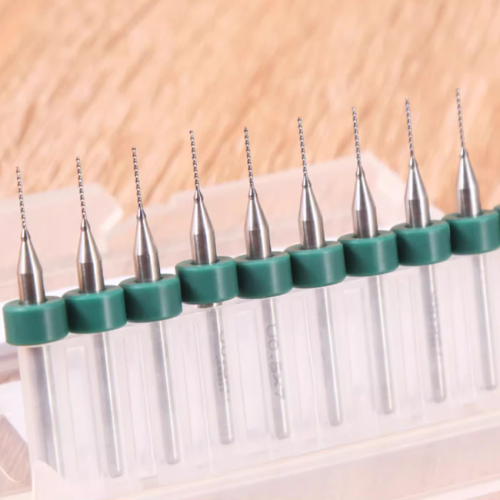
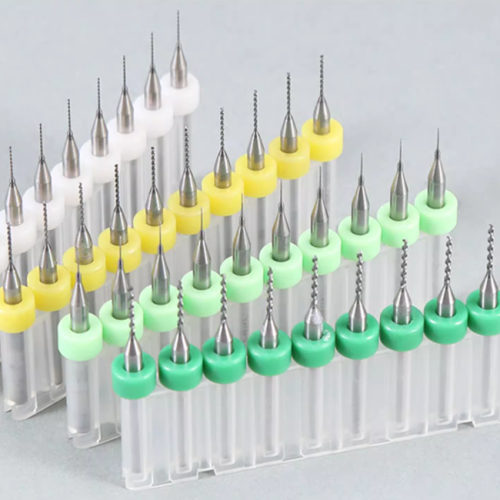
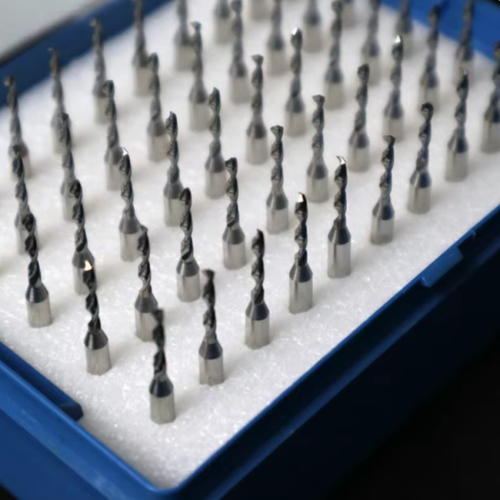
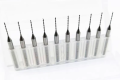
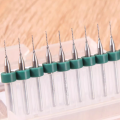
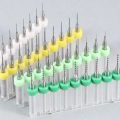
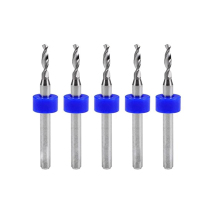
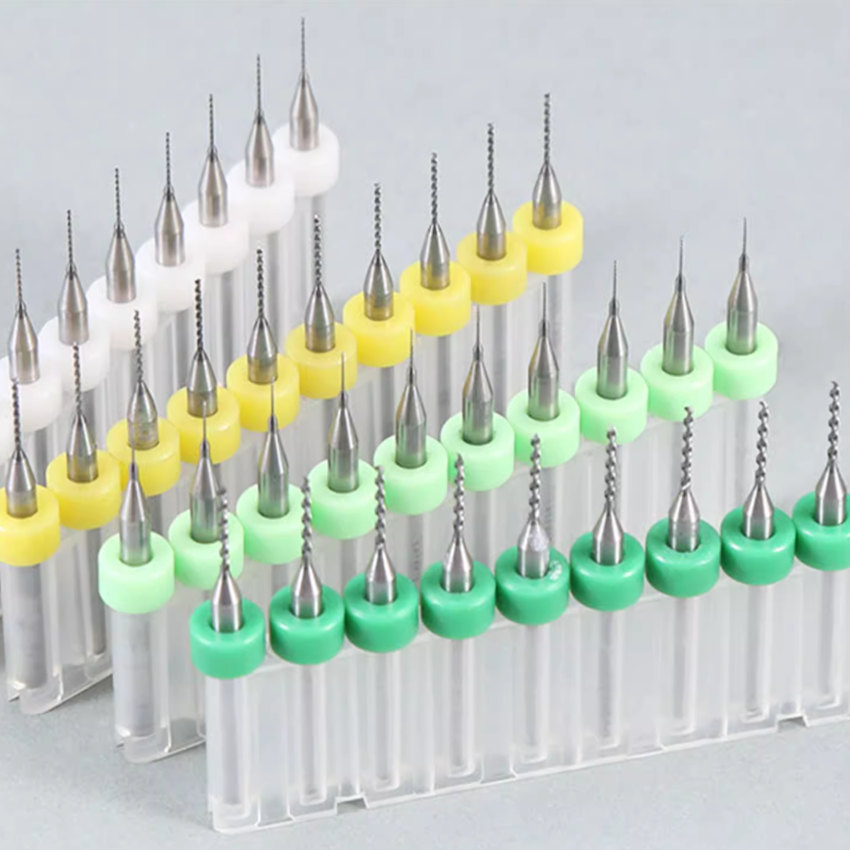
Tungsten Carbide Mirco PCB Drill bit
$0.18
~ $2.00
/ Piece/Pieces
Get Latest Price
You might also like

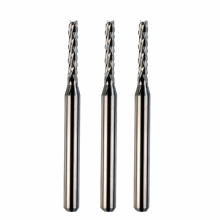
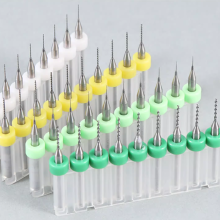
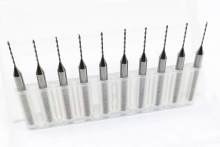
Basic Info
| Model No. | well-drill01 |
|---|---|
| Brand Name | Welltronics |
| Diameter | 3.175mm |
| Overall Length | 38mm |
| Material | Carbide |
| Suitable for | PCB FR4 drilling |
| Flute length | 7.5-10.5mm |
Show More
Product description
PCB drill bits are precision tools used to drill holes on printed circuit boards (PCBs) in electronic manufacturing. They are usually made of superhard materials such as tungsten steel (hard alloy) or tungsten carbide. They are designed to meet the requirements of high hardness, high wear resistance, and low thermal expansion coefficient to meet the challenges of high speed (usually ≥100,000 rpm), small aperture (minimum 0.05mm), and complex materials (such as FR-4, high-frequency ceramic substrates) in PCB processing.
Key features:
?
Material: tungsten steel (WC-Co alloy) or tungsten carbide (WC matrix + Co/Ni binder), hardness up to HRA 92-94;
Structure: straight shank, stepped or coated, blade diameter accuracy within ±0.005mm;
Coating technology: TiAlN, DLC (diamond-like carbon), etc., to improve wear resistance and high temperature resistance
?
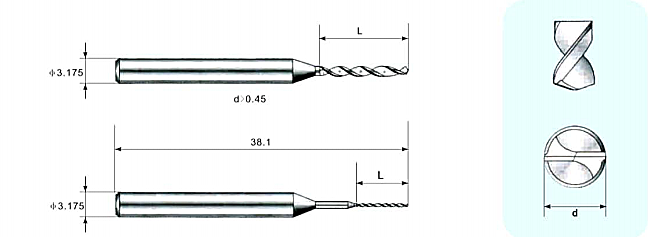
?
| Name | Drill bit, PCB drill bit,PCB drill |
| Material | Tungsten carbide |
| Ovenrall length | 38.1mm±0.1mm |
| Diameter | 3.175mm |
| Flute length | 4.3-10.5mm(depends on flute dia) |
| Flute dia | 0.2-6.5mm |
| Packing | 50pcs/box, 40box/carton |
| MOQ | 50PCS |
?
PCB drill bit Advantage:
?
1、 Large chip removal space: small chip removal resistance, smooth chip removal, small drilling heat, reduce drilling pollution;
?
2、 Extraordinary cutting edge sharpness: due to the use of nanotechnology and advanced grinding technology, the cutting edge of the drill is sharper than before, which can reduce the cutting force and improve the processing efficiency.
?
3、 Tool design based on customer application: rich variety of drill bits can meet different application needs
?
?
?
Q: When processing high-frequency materials (such as Rogers 4350B), which one is more suitable for micro-holes below 0.1mm, tungsten steel drill or tungsten carbide drill?
A:
Tungsten steel drill:
Advantages: High toughness (strong impact resistance), suitable for processing hard plates filled with glass fiber or ceramics;
Limitations: Fast hardness decay at high temperatures, and the hole diameter is easy to expand during continuous processing (such as a 0.1mm hole may expand to 0.105mm).
Tungsten carbide drill:
Advantages: Higher hardness (HRA 93-94), wear resistance increased by more than 30%, suitable for low-loss drilling of high-frequency materials;
Limitations: Large brittleness, requires a high-precision spindle (radial runout ≤3μm) to avoid chipping.
?



Tungsten Carbide Mirco PCB Drill bit
$0.18
~ $2.00
/ Piece/Pieces
Get Latest Price
Send your inquiry to this supplier
You may also be interested in
Product Categories
New products



Send Inquiry
Product Alert
Subscribe to your interested keywords. We will send freely the latest and hottest products to your Inbox. Don't miss any trade information.
Subscribe
Your use of this website constitutes acknowledgement and acceptance of our Terms & Conditions.
Copyright ? 2009-2026 Bossgoo Co., Ltd. All rights reserved.
版權(quán)所有 ? 寧波全貿(mào)信息技術(shù)有限公司 浙ICP備12012821號(hào)-1 浙B2-20200628
