
Search

Sign In Join Free








Video
1 / 7
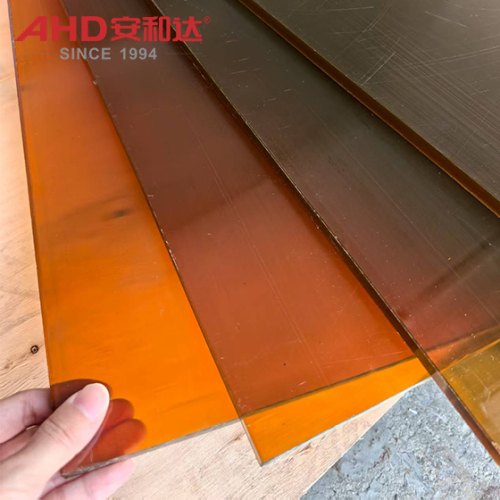
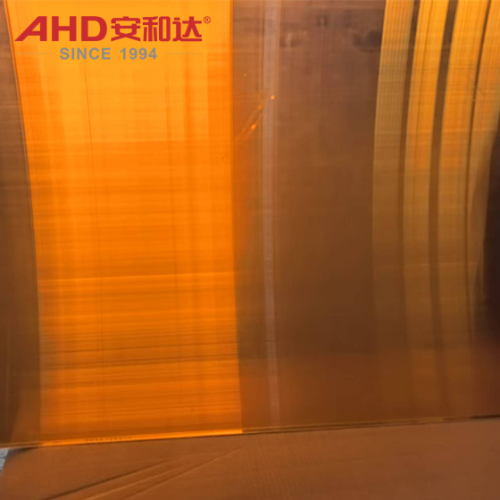
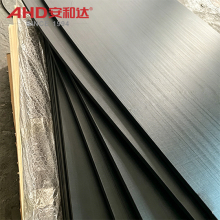
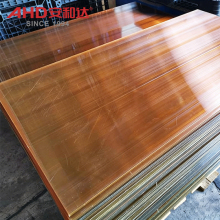
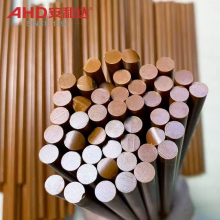
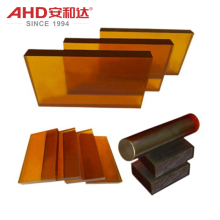
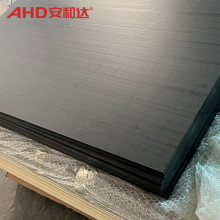
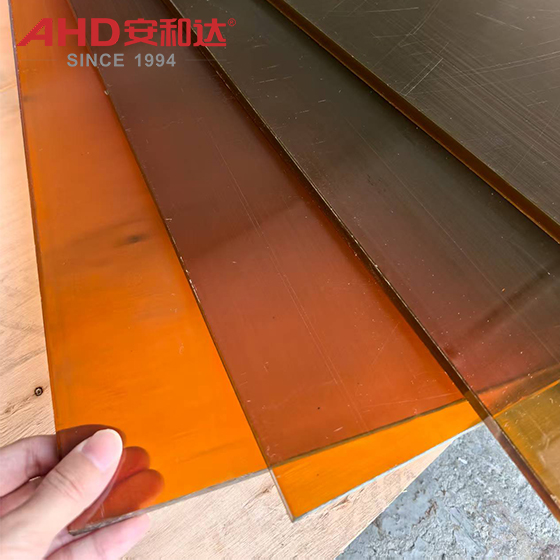
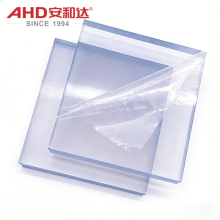
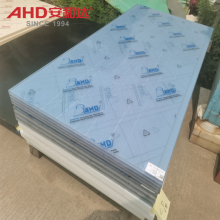
Amber Polyether Imide PEI Sheet high strength
Get Latest Price
You might also like



Basic Info
| Model No. | AHD-PEI SHEET |
|---|---|
| Brand Name | AHD |
| place of origin | China |
| Processing Service | Moulding, Cutting |
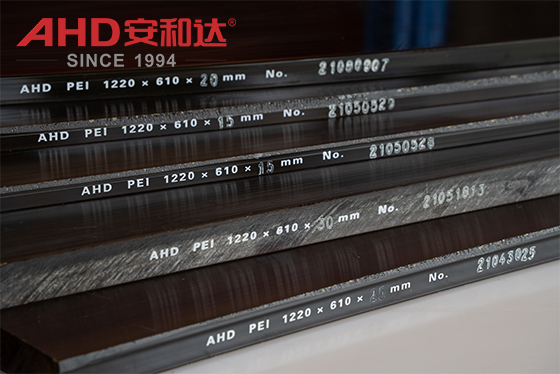
| Thick (mm) | 5--80 |
| Size (mm) | 610*1220 |
| Color | Amber |
Product description

PEI (Polyetherimide) is a high-performance specialty engineering plastic widely used in high-end manufacturing due to its excellent overall performance. The following provides a detailed explanation of its formation process, characteristics, advantages, applications, and precautions:
?
?
I. PEI Sheet Formation Process
The synthesis and molding of PEI involves two core stages: resin preparation and sheet processing:
?
1. Resin Synthesis
The chemical structure of PEI consists of alternating aromatic ether bonds (-O-) and imide rings (-CO-N-CO-). It is prepared via a nucleophilic substitution polycondensation method:
?
Monomer Selection: The main raw materials are 4,4'-diaminodiphenyl ether (ODA, a diamine containing an ether bond) and isophthaloyl chloride (IPC, a dibasic acid containing an acyl chloride group).
?
Reaction Conditions: In a polar aprotic solvent, at high temperature (approximately 200-300°C) and under the catalysis of a strong base, the diamine and dibasic acid chloride undergo a polycondensation reaction, removing the small HCl molecules and gradually forming a high molecular weight chain.
?
Post-Processing: The resulting polymer solution is precipitated (e.g., by pouring into water or an alcoholic solvent), filtered, and dried to obtain a powdered or granular PEI resin.
?
2. Sheet Forming
PEI resin requires specific processing to form sheet. Common methods include:
?
Extrusion: Resin pellets are heated and melted in a screw extruder (melting point approximately 343°C), extruded through a slot die, and then calendered, cooled, and drawn to form a continuous sheet.
?
Hot Compression Molding: Resin powder or prepreg is placed in a mold and heated above its glass transition temperature (Tg≈217°C) to soften it. High pressure (10-30 MPa) is applied to cause it to flow and fill the mold cavity. After cooling, the sheet is demolded to form a sheet (suitable for thick sheets or complex shapes).
?
Cast Film (for ultra-thin sheets): The resin solution is cast onto a high-temperature release roller through a coating head. After the solvent evaporates, a thin film (thickness <0.1 mm) is formed.
?
?
II. Core Properties of?Polyetherimide Sheet
PEI's comprehensive performance far exceeds that of ordinary engineering plastics. Key features are as follows:
?
1. High Temperature Resistance
?
Long-term operating temperature: -50°C to 170°C (unloaded), short-term operating temperature up to 210°C.
Glass transition temperature (Tg) ≈ 217°C, melting point (Tm) ≈ 343°C, maintaining mechanical strength even at high temperatures (tensile strength > 80 MPa at 150°C).
?
2. Excellent Mechanical Properties
?
High rigidity and strength: Tensile strength 100-150 MPa (unreinforced), flexural modulus 3.5-4.0 GPa (close to metal).
Fatigue Resistance: Minimal performance degradation after repeated loading, making it suitable for dynamic load scenarios.
?
3. Excellent Chemical Resistance
?
Resistant to most organic solvents, weak acids, and weak bases, but slowly corroded by strong acids and bases.
Excellent hydrolysis resistance (can withstand long-term use in high-temperature, high-pressure steam).
?
4. Outstanding Electrical Performance
?
Extremely low dielectric constant (ε≈3.1, 1MHz) and dissipation factor (tanδ≈0.001, 1GHz), stable at high frequencies, suitable for applications such as 5G communications and radar.
Volume resistivity >101?·cm, surface resistivity >101?Ω, and excellent insulation.
?
5. Other Properties
?
Self-extinguishing: Achieves UL94 V-0 rating (0.25mm thickness) without the addition of flame retardants, and produces very low smoke (smoke density <50).
Radiation Resistance: Highly resistant to gamma rays and X-rays (maintains performance even at radiation doses >10?Gy), suitable for the nuclear industry.
Dimensional Stability: Low linear expansion coefficient (approximately 3×10??/°C), minimal deformation at high temperatures
?

?
III. Core Advantages of?PEI Plastic Sheet
Compared to similar high-performance materials (such as PPS and PI), PEI's advantages are:
?
Balanced Performance: It offers a better balance between heat resistance, mechanical strength, and processability (e.g., easier to process than PI and stronger than PPS).
?
Excellent Processing Adaptability: It can be formed through a variety of processes, including extrusion, injection molding, and hot pressing, making it suitable for complex structures.
?
Cost Advantage: While its unit price is higher than that of ordinary engineering plastics, it is lower than that of most specialty engineering plastics (such as PEEK), offering an excellent value for money.
?
Environmentally Friendly and Safe: It is non-toxic, suitable for food contact (can meet FDA standards), and does not release toxic gases when burned.
?
?
IV. Main Applications and Specific Methods of?PEI Board
?
1. Electronics and Electrical
?
5G Communications Equipment: Serves as a substrate for high-frequency circuit boards, leveraging its low dielectric constant to improve signal transmission speeds (e.g., 5G base station antenna covers and filter brackets).
?
Semiconductor Manufacturing: Used in wafer trays, offering heat resistance and low outgassing (to prevent wafer contamination).
?
Connectors and Coil Bobbins: Utilizes its high rigidity to create precision connectors or motor stator/rotor bobbins (corona and heat resistance).
?
2. Aerospace and Defense
?
Lightweight Structural Parts: Replacing aluminum alloy in aircraft interiors and engine thermal shields.
?
Radar and Sensors: Used in radar antenna covers (excellent wave transmission) and missile guidance system housings (impact and radiation resistance).
?
3. Automotive Industry
?
New Energy Vehicles: Serves as battery pack sealing caps (electrolyte corrosion resistance) and motor insulation brackets.
?
Traditional Vehicles: Serves as sensor housings (e.g., oxygen sensors and temperature sensors).
?
4. Healthcare
?
Surgical Instruments: Orthopedic surgical clamps and dental implant aids (steam sterilization resistant, reproducible high-temperature and high-pressure sterilization).
?
Medical Equipment: CT/X-ray machine housings (low radiation absorption), infusion pump housings (disinfectant corrosion resistant).
?
5. Industrial Sector
?
Corrosion-Resistant Equipment: Chemical pump and valve seals, oil pipeline connectors (oil and gas corrosion resistant).
?
Precision Machinery: Robotic joint bearing cages (high rigidity, low friction).
?

?
?
V. Precautions for Using PEI Sheet
Despite its excellent performance, the following key points should be noted when using PEI:
?
1. Processing Condition Control
High-Temperature Processing: Extrusion/injection temperatures must be ≥340°C (close to the melting point), and the mold must be preheated (≥150°C) to avoid cold marks; the cooling rate should be slow (to prevent internal stress-induced cracking).
Tool Wear: Carbide or diamond tools should be used for machining (PEI's high hardness makes ordinary tools susceptible to wear).
?
2. Environmental Adaptability
Low-Temperature Limitations: Impact toughness testing is required for long-term use below -50°C (notched impact strength may decrease at low temperatures).
Chemical Corrosion Protection: Avoid contact with strong oxidizing acids such as concentrated sulfuric acid and concentrated nitric acid, or enhance corrosion resistance with a surface coating (such as epoxy resin).
?
3. Dimensional Stability
Although hygroscopic, it still requires drying before processing to prevent moisture-induced bubbles or surface defects.
?
4. Surface Treatment
Plasma treatment or flame treatment (to increase surface energy) is required before bonding or plating; otherwise, poor adhesive/plating adhesion will result.
?
5. Cost Considerations
PEI is relatively expensive, so it's important to consider whether it's a necessary material.
?
?
PEI Sheet, with its high-temperature resistance, high strength, and low dielectric properties, has become an all-round material in high-end manufacturing, particularly in 5G communications, aerospace, and medical equipment. When using it, special attention should be paid to processing temperature control, environmental adaptability, and surface treatment to maximize its performance advantages.
?




Video
Amber PEI sheet
Amber PEI sheet
Amber PEI sheet
Amber Polyether Imide PEI Sheet high strength
Get Latest Price
Send your inquiry to this supplier
You may also be interested in
Product Categories
New products
Send Inquiry
Product Alert
Subscribe to your interested keywords. We will send freely the latest and hottest products to your Inbox. Don't miss any trade information.
Subscribe
Your use of this website constitutes acknowledgement and acceptance of our Terms & Conditions.
Copyright ? 2009-2026 Bossgoo Co., Ltd. All rights reserved.
