
Search

Sign In Join Free








Video
1 / 8
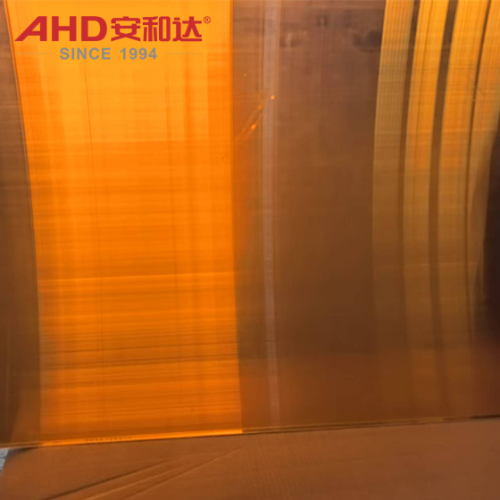
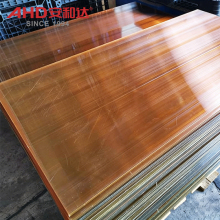
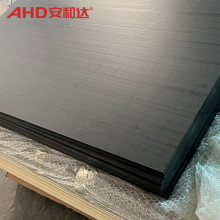
PEI Sheet High Temperature And Hydrolysis Resistant
Get Latest Price
You might also like



Basic Info
| Model No. | AHD-PEI SHEET |
|---|---|
| Brand Name | AHD |
| place of origin | China |
| Processing Service | Cutting, Moulding |
| Thick (mm) | 5--80 |
| Size (mm) | 610*1220 |
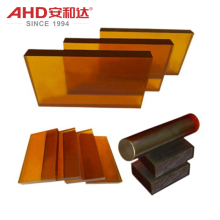
| Color | Amber |
Product description

PEI (polyetherimide) is a high-performance specialty engineering plastic and a semi-crystalline derivative of polyimide (PI). Its molecular structure contains ether bonds (-O-) and imine rings (-CO-N-CO-), giving it excellent overall performance, particularly in applications requiring high temperatures, high strength, and chemical resistance.
?
?
Core Properties of?PEI SHEET
PEI's performance is determined by its molecular structure, encompassing multiple dimensions including thermal, mechanical, chemical, and electrical properties. These properties are as follows:
?
1. Excellent Heat Resistance
Glass transition temperature (Tg): Approximately 217°C (semi-crystalline state), with the amorphous state boasting a higher Tg (>250°C).
Heat deflection temperature (HDT): Unreinforced grades have an HDT of approximately 200°C, while glass fiber-reinforced grades (PEI GF)can reach over 260°C.
Long-term operating temperature: -50°C to +180°C (unreinforced), with short-term temperature resistance up to 200°C (amorphous state).
Low-temperature resistance: Maintains excellent toughness at -50°C, with no brittle cracking.
?
2. Excellent Mechanical Properties
Strength and Modulus: Unreinforced grades offer a tensile strength of approximately 90-110 MPa, a flexural strength of 150-180 MPa, and a flexural modulus of 3.6-4.0 GPa. Glass fiber reinforcement (pei glass fiber) increases the tensile strength to 180-220 MPa and the modulus to 10-12 GPa.
Fatigue Resistance: Stable performance under cyclic loading, with high fatigue strength retention.
Impact Resistance: Notched impact strength is approximately 5-10 kJ/m2 (unreinforced), which can be further improved with glass or carbon fiber reinforcement.
?
3. Excellent Chemical and Radiation Resistance
Chemical Corrosion Resistance: It is virtually insoluble in common organic solvents, except for strong oxidizing acids such as concentrated sulfuric acid and nitric acid, and exhibits excellent hydrolysis resistance.
Radiation Resistance: It exhibits strong resistance to gamma rays, X-rays, and UV rays, making it suitable for use in nuclear and space environments.
?
4. Self-lubrication and Wear Resistance
PEI has low surface energy and a certain degree of self-lubrication. Its wear resistance surpasses that of most engineering plastics, making it a suitable alternative to traditional metal bearings or gears.
?
5. Flame Retardancy and Safety
It achieves UL94 V-0 rating without the addition of flame retardants, emits extremely low smoke during combustion, and meets low-smoke requirements in aviation, medical, and other fields.
It is non-toxic and food contact-safe, making it suitable for medical devices and food processing equipment.
?
6. Electrical Insulation and High-Frequency Performance
With a volume resistivity greater than 101? Ω·cm, a surface resistivity greater than 101? Ω, a dielectric constant (at 1MHz) of approximately 3.1, and a dielectric loss tangent (at 1MHz) of approximately 0.001, it is an excellent insulating material.
In high-frequency applications (such as 5G millimeter waves and radar), its dielectric properties are stable, making it suitable for high-frequency circuit board substrates or radomes.
?
7. Dimensional Stability
It has low hygroscopicity and requires only brief drying (80-100°C, 2-4 hours) before processing. Dimensional change after molding is minimal, making it suitable for high-precision parts.
?


?
PEI's Core Advantages
Compared to other engineering plastics or metals, PEI's advantages lie in the following:
?
1. Unique Combination of "High-Temperature + High-Strength"
PEI maintains high strength at 200°C, while most engineering plastics experience a significant drop in strength above 120°C. Compared to aluminum alloys, PEI's density is only one-third that of aluminum, yet its strength-to-density ratio (strength/density) approaches or even exceeds that of some aluminum alloys.
?
2. Dual Resistance to Chemical Corrosion and Radiation
PEI is stable to most chemical media and exhibits radiation resistance far exceeding that of ordinary plastics, making it suitable for harsh environments.
?
3. Low Moisture Absorption and Dimensional Stability
PEI has a moisture absorption rate of only 0.25%, resulting in minimal dimensional change after molding, making it suitable for high-precision assembly.
?
4. Comprehensive Flame Retardancy and Safety
It achieves UL94 V-0 rating without the need for flame retardants and generates extremely low smoke, meeting the stringent requirements of medical and aviation applications.
?
5. Versatile and Expandable
Performance can be further optimized through modification (such as glass fiber/carbon fiber reinforcement, flame retardants, and UV stabilizers), adapting to diverse applications (e.g., reinforced grades for increased strength, flame-retardant grades for electronic devices).
?
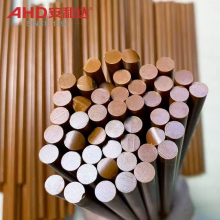
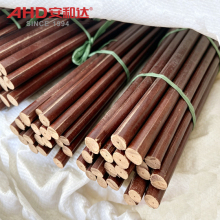
Besides, we offer PEI ROD, too. Contract us for more information or click below.




Video
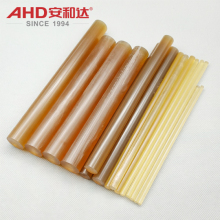
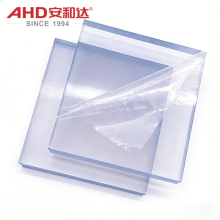
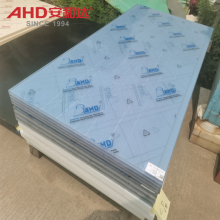
Amber PEI sheet
Amber PEI sheet
Amber PEI sheet
PEI Sheet High Temperature And Hydrolysis Resistant
Get Latest Price
Send your inquiry to this supplier
You may also be interested in
Product Categories
New products
Send Inquiry
Product Alert
Subscribe to your interested keywords. We will send freely the latest and hottest products to your Inbox. Don't miss any trade information.
Subscribe
Your use of this website constitutes acknowledgement and acceptance of our Terms & Conditions.
Copyright ? 2009-2026 Bossgoo Co., Ltd. All rights reserved.
