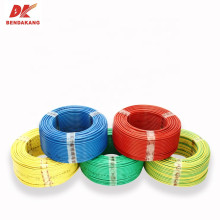
1. Material Type and Construction
Conductor Material
Bare copper conductors are used, meeting Class 2 (stranded round copper conductors) or Class 1 (single round copper conductors, customizable) standards according to IEC 60228 and VDE 0276. Copper conductors offer high conductivity (≥57 MS/m) and low resistivity, ensuring efficient power transmission. They also offer high ductility for easy bending and installation.
?
Insulation Material
PVC (polyvinyl chloride) insulation, with thickness specified in accordance with IEC 60502-1 and VDE 0276 standards (e.g., insulation thickness for a 16mm2 conductor ≥1.0mm). PVC material is heat-resistant up to 85°C (continuous operation), flame-retardant (compliant with IEC 60332-3-22), and resistant to acids, alkalis, and oils, making it suitable for use in harsh environments.
?
Sheath Material: PVC outer sheath, type ST2 (IEC 60502-1) or Type 9 (BS 6346/5467), provides mechanical protection against moisture, UV rays, and abrasion. LSZH (Low Smoke Zero Halogen), PE (Polyethylene), or CPE (Chlorinated Polyethylene) sheaths can be used upon request to meet fire or weather resistance requirements.
?
Armor (Optional):
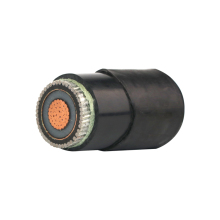
According to VDE 0276, armored cables are spirally wrapped with galvanized steel or aluminum tape to enhance resistance to mechanical forces (e.g., direct burial in soil or tunneling) while also providing a path for ground fault currents to ensure safety.
2. Appearance
Conductor Appearance:
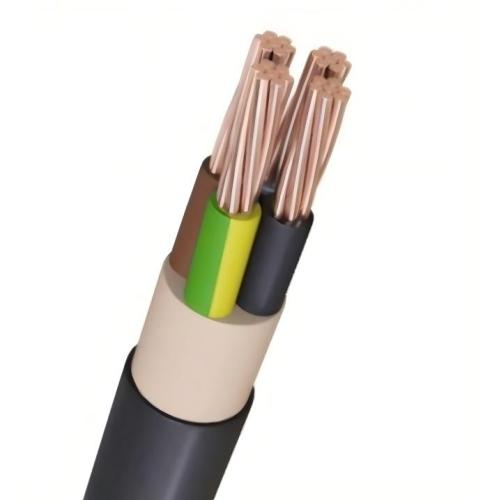
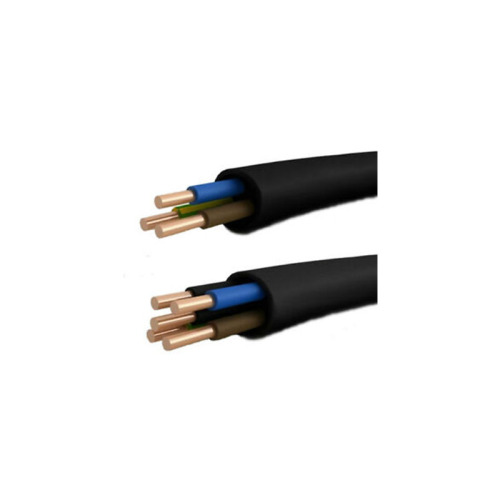
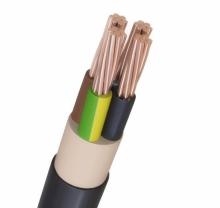
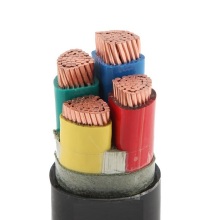
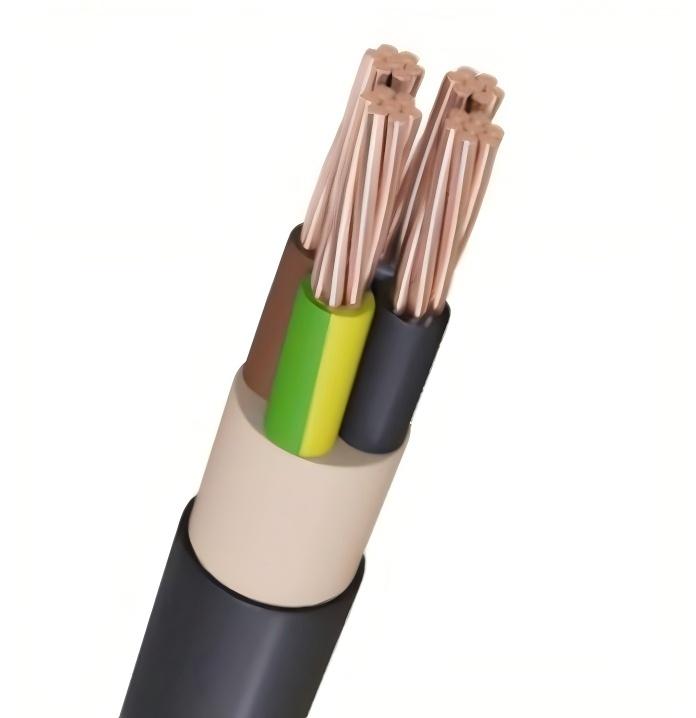
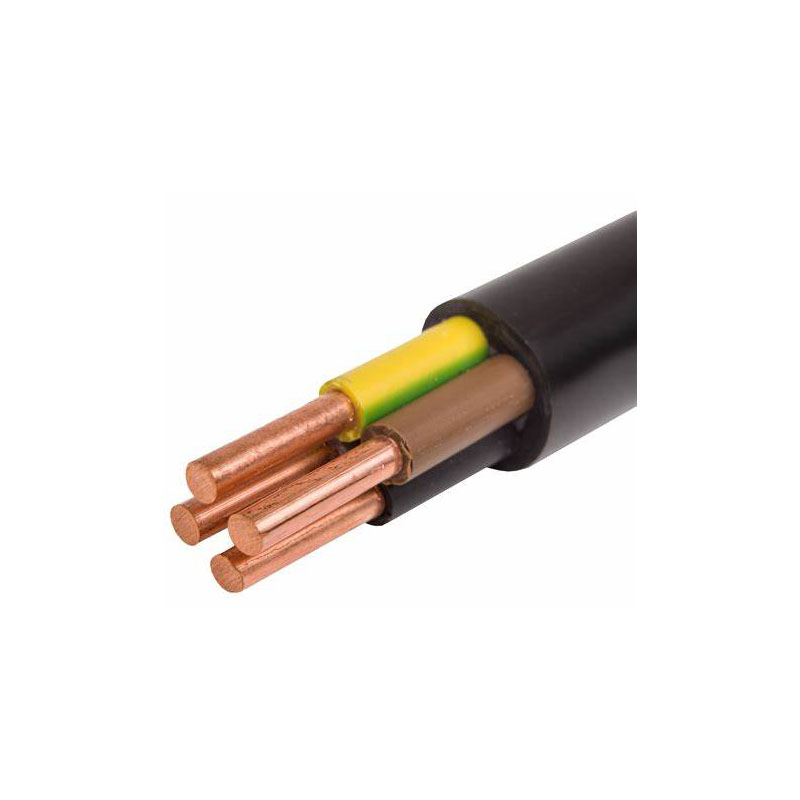
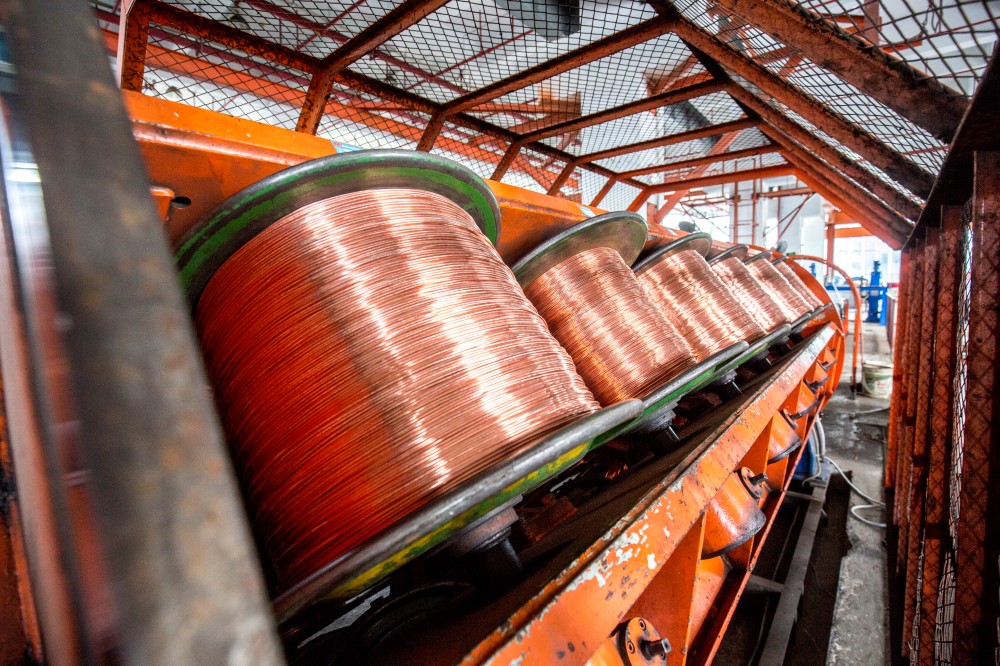
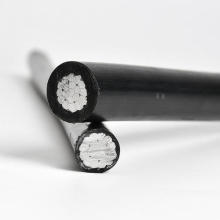
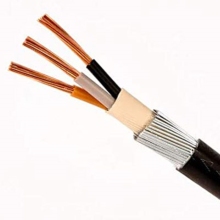
The bare copper conductor is bright metallic in color, with a smooth, unoxidized surface. The stranded conductor is tightly stranded, free of broken or loose wires.
?
Insulation Appearance:
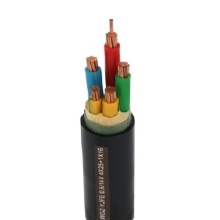
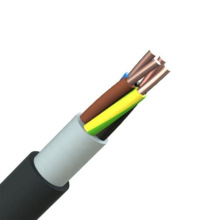
The PVC insulation uniformly wraps the conductor, typically black (other colors available). The surface is free of bubbles, cracks, or impurities, and the thickness is clearly marked.
?
Sheath Appearance
The outer sheath is black PVC, with a smooth surface free of scratches or dents. It is printed with the model number, specifications, certification marks (such as VDE, IEC, CCC), and production batch number. The armored cable's outer layer features spiral steel or aluminum tape with even spacing.
?
Overall Structure
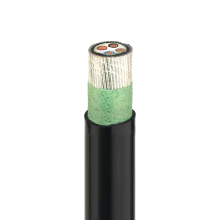
The four-core cable is arranged in a circular pattern, with non-hygroscopic material (such as PP rope) filling the gaps between the cores to maintain shape stability. The outer sheath fits tightly to the internal structure without loosening or deformation.
3. Performance Advantages
Electrical Performance
Rated voltage 0.6/1kV, suitable for low-voltage power distribution systems, with high insulation resistance (≥20MΩ·km) to reduce power loss.
Heat Resistance: The PVC insulation layer can withstand temperatures of 85°C for extended periods and 160°C during a short circuit (within 5 seconds), ensuring safety.
Flame Retardancy: Passes the IEC 60332-3-22 flame test and self-extinguishes when removed from flame, reducing the risk of fire spread.
?
Mechanical Properties
Tensile Strength: The copper conductor has a tensile strength of ≥220 MPa. Combined with the armor layer, it can withstand the tensile forces of direct burial in soil or pipeline installation.
Bending Resistance: The minimum bending radius of the conductor is 15 times the cable's outer diameter (unarmored), making it suitable for installation in confined spaces.
Abrasion Resistance: The PVC sheath has a high abrasion resistance, making it suitable for environments subject to frequent dragging and abrasion.
?
Environmental Adaptability
Weather Resistance: The PVC sheath is UV-resistant and has an outdoor service life exceeding 20 years.
Moisture Resistance: The conductor shield (if configured) and PVC insulation are both waterproof and suitable for high-humidity environments (such as Southeast Asia and coastal areas).
Chemical Resistance: The PVC material is resistant to acids, alkalis, and salt spray, making it suitable for industrially polluted areas.
4. Application Scenarios
Building Power Distribution
This cable is used for indoor and outdoor low-voltage power distribution systems, such as those in residential buildings, commercial complexes, and hospitals, connecting distribution boxes with terminal equipment (such as lighting, air conditioning, and elevators).
?
Industrial Facilities
Suitable for use in factories, mines, ports, and other locations, providing stable power to machinery and automated production lines. Its armored construction protects against mechanical damage and rodent bites.
?
Infrastructure
Used for lighting and power supply in tunnels, bridges, subways, and other projects. The flame retardant and weather-resistant PVC sheath ensures long-term safe operation.
?
Renewable Energy
Serves as the connecting cable between inverters and transformers in solar and wind power plants, withstanding harsh outdoor environments and ensuring efficient power transmission.
?
Export Compatibility
Compliant with VDE (Germany) and IEC (International) standards, it is suitable for export to Europe, the Middle East, Southeast Asia, and other regions, meeting local electrical safety regulations (such as the German VDE 0100 standard for electrical installations in buildings).
Copper Core NYY 4 Core
Standard:? VDE0276, VDE0271, IEC 60502
Rated Voltage: 0.6/1kV
Conductors:?
re conductor:?Class 1 stranded plain copper as per IEC 60228?
sm conductor:?Class 2 stranded plain copperas per IEC 60228
Insulation: PVC (Polyvinyl-Chloride)
Sheath/Jacket: PVC (Polyvinyl-Chloride)
Operating temperature: Maximum 70°C, minimum bending 0°C
Others:?Fire cable and other property?Low Voltage Power Cable?can be available
Applications: Those?LV Power Cables?used for electricity supply?in?fixed installation,?power networks,underground and in cable ducting where?where mechanical damages are not to be expected.?
?
BDK is a leading Electrical Cable,? Electric Power Cable manufacture, the annual turnover reach USD 0.3 billion.We are the qualified supplier of State Power Grid, China Southern Power Grid and Vanke Group, Country Garden,ect and other large, medium partners around the world.

?