
Search

Sign In Join Free
1 / 2
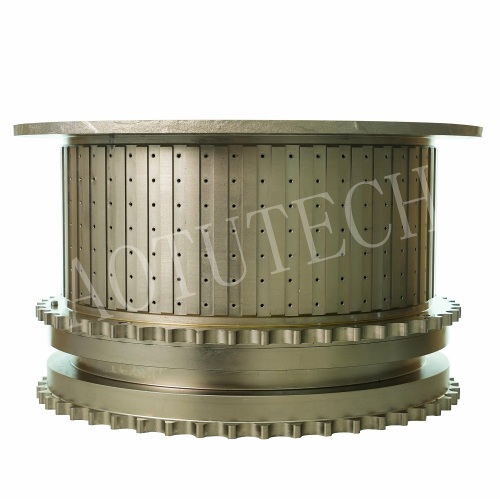
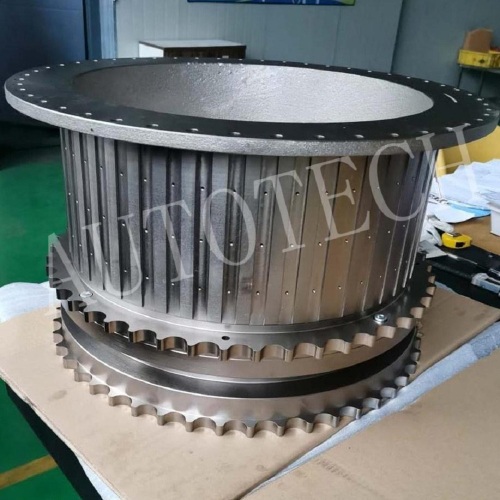
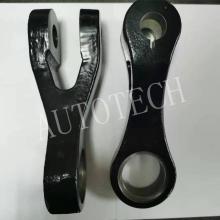
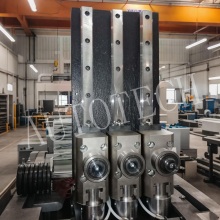
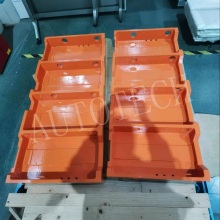
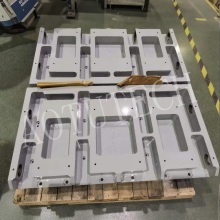
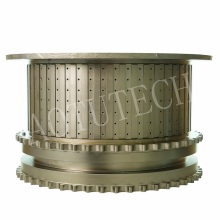
Heavy Duty Sprocket Driven Rotating Hopper
Get Latest Price
You might also like

Basic Info
| Material | GJS 600-3 |
|---|---|
| Producing Process | Sand Casting + Machining |
| Usage | Food Machine Line |
| Weight | 104.1kg |
Product description
The Base Arm Connector for Food Processing Line: Critical Structural Excellence for High-Demand Production
?
The Base Arm Connector for Food Processing Line is a critical, large-scale structural component designed specifically for high-demand food and beverage production lines. Resembling a robust, telephone-shaped support structure, this 360 kg unit serves as the foundational connection and motion transfer point between major machine sections. Guided by a meticulous Process Design philosophy, it is engineered for exceptional performance in continuous operation environments, distinguishing itself from alternatives like Aluminum Casting, Forging, or Steel Investment Casting for such large, complex geometries.
Manufactured from high-strength QT600-3 ductile iron—produced via Ductile Iron Sand Casting to achieve its complex shape—and refined through extensive precision Machining, this component excels in load-bearing capacity, durability, and sanitary compliance, key requirements for food processing environments. Its Process Design ensures optimal performance from initial concept through final assembly, with the synergy of Ductile Iron Sand Casting (for structural integrity) and precision Machining (for dimensional accuracy) outperforming Aluminum Casting (insufficient strength for large-scale use) and Forging (cost-prohibitive for complex geometries) in this application. Unlike Steel Investment Casting, the chosen Ductile Iron Sand Casting process balances cost-efficiency with the component’s high-performance demands, making it an indispensable part of reliable food and beverage production lines.
?
?
Product Features:
1. High-Strength Material for Demanding Dual Functions:
1. High-Strength Material for Demanding Dual Functions:
?
The hopper is cast from QT600-3 ductile iron, a material chosen for its exceptional mechanical properties. With a minimum tensile strength of 600 MPa and excellent toughness (3% elongation), it is ideally suited to withstand two primary types of stress:
?
Structural & Impact Loads: The hopper body must resist the abrasive wear and occasional impact from conveyed food products (e.g., nuts, frozen vegetables, hard candies).
?
Dynamic Drive Loads: The integral sprocket transmits significant torque to rotate the hopper, requiring high fatigue strength and resistance to tooth shear forces.
?
This combination of strength and durability is critical and exceeds the capabilities of most Aluminum Casting alloys for a part of this size and function.
2. Integrated Manufacturing for a Complex Component:
The production of the Rotating Hopper is a multi-stage, integrated process:
Ductile Iron Sand Casting: The foundational process is Ductile Iron Sand Casting. This method is economically and technically optimal for forming the hopper's complex, one-piece geometry, which seamlessly combines the large volumetric container with the detailed, toothed sprocket wheel. Sand casting allows for the creation of internal contours, reinforcing ribs within the hopper walls, and the precise tooth profiles of the drive sprocket in a single, homogeneous casting. For a 104.1 kg part with this level of geometric integration, Sand Casting offers significant advantages over Steel Investment Casting (which would be prohibitively expensive at this scale) or Forging (which cannot achieve such hollow, intricate shapes).
Precision Machining: Post-casting, the component undergoes comprehensive CNC machining. This is not a mere finishing step but a critical precision operation. Key machined areas include:
The sprocket tooth profiles are finish-machined to ensure perfect engagement with the drive chain, minimizing wear and noise.
The central rotation shaft bore or bearing journals are machined to extremely tight tolerances for smooth, wobble-free rotation.
The hopper's top flange (for lid attachment) and bottom discharge interface are machined flat to ensure proper sealing.
?
Any mounting surfaces for sensors or accessories are precisely located and finished.
?
Electroless Nickel Plating: The final manufacturing step is the application of a uniform, hard electroless nickel plating. This coating serves multiple vital functions:
?
Corrosion Resistance: Provides a superb barrier against moisture, cleaning chemicals, and mild acidic/alkaline food substances.
?
Surface Hardness & Wear Resistance: Significantly increases the surface hardness, protecting the sprocket teeth from chain wear and the hopper interior from product abrasion.? ?
?
Sanitary Surface: Creates a smooth, non-porous, and easy-to-clean surface that meets food processing hygiene requirements. It is superior to paint and more cost-effective for complex shapes than stainless steel cladding.
3. Holistic Engineering via Process Design
3. Holistic Engineering via Process Design
?
The product's reliability is engineered from the outset through integrated Process Design. This encompasses:
?
Simulation-Optimized Casting: Mold filling and solidification simulations ensure the QT600-3 material solidifies uniformly, preventing weak spots or defects in critical areas like the sprocket web or hopper transition zones.
?
Design for Function & Manufacture: The hopper's shape is designed for optimal material flow (avoiding bridging or sticking), while also being designed for ease of molding, machining fixturing, and plating bath immersion.
Performance Validation: The design process includes structural FEA (Finite Element Analysis) to verify the hopper and sprocket can handle maximum loads, and dynamic analysis to ensure smooth rotational characteristics.
?
Usage Scenarios
Batch Feeding & Metering Systems: The rotating hopper is central to systems that require controlled, measured discharge of ingredients into mixers, blenders, or cooking vessels in food processing (e.g., snack foods, bakery, confectionery).
Buffer/Accumulation Stations: Used in packaging lines to act as a buffer between continuous production and intermittent packaging machines, rotating to gently feed products like bottles or pouches onto conveyors.
Coating & Seasoning Drums: The hopper itself can function as a rotating drum for tumbling and evenly coating products.
Sanitary Material Handling: Ideal for applications requiring frequent washdowns, as the nickel-plated surface resists corrosion and is easy to clean.
?
Audience Benefits:
1. For Food Production Plant Managers & Operations Directors:
?
Uninterrupted Production Flow: The extreme durability of the QT600-3 iron and the wear-resistant nickel plating drastically reduce unplanned stoppages due to component failure, hopper wear-through, or sprocket tooth damage. This maximizes line uptime and Overall Equipment Effectiveness (OEE).
?
Reduced Total Cost of Ownership: While the initial investment is robust, the component's long service life eliminates frequent replacements. The reduced wear on mating parts (chains, bearings) lowers overall maintenance costs. Its longevity provides a superior return on investment compared to lighter-duty alternatives.
?
Hygiene and Compliance Assurance: The smooth, non-reactive, and cleanable nickel-plated surface supports compliance with food safety standards (e.g., FDA, EHEDG), reducing contamination risks and simplifying audit processes.
2. For Maintenance Supervisors and Technicians:
2. For Maintenance Supervisors and Technicians:
?
Extended Maintenance Intervals: The hardened, wear-resistant surfaces mean the hopper and its integrated drive require less frequent inspection and adjustment. Chain and sprocket wear is minimized.
Reliable and Repeatable Performance: Precision machining ensures consistent alignment and balance. Technicians can trust that the component will perform as specified, reducing troubleshooting time and "ghost" failures.
Simplified Cleaning and Sanitation: The plated surface allows for faster, more effective cleaning cycles, reducing labor time and ensuring thorough sanitation.
3. For Food Machinery OEMs (Original Equipment Manufacturers):
?
Integrated, High-Value Subassembly: This product provides OEMs with a pre-engineered, high-performance module that simplifies their machine design. They source a complete, validated drive-and-container unit rather than designing and sourcing separate parts.
Competitive Advantage through Durability: Incorporating such a robust component allows OEMs to market their machinery with higher reliability claims and longer warranty periods, differentiating themselves in the market.
Optimized Supply Chain: Dealing with a single supplier for this complex cast, machined, and plated assembly streamlines procurement, quality control, and inventory management.
?
Competitive Advantage Analysis
The Rotating Hopper is specified based on a clear performance hierarchy for its application:
?
vs. Aluminum Casting: Aluminum Casting would result in a component less than half the weight but critically lacking in the necessary stiffness, wear resistance, and fatigue strength for a driven sprocket application. The surface would be too soft for chain drive engagement and prone to rapid erosion from abrasive products.
?
vs. Fabricated/Welded Steel: A welded hopper with a welded-on sprocket is a common alternative. However, it lacks the structural homogeneity and vibration-damping properties of a single casting. Weld seams can be points of fatigue failure and are difficult to finish to a sanitary standard comparable to nickel plating.
?
vs. Steel Investment Casting: For the sprocket alone, Steel Investment Casting could produce excellent teeth. However, for the entire 104.1 kg integrated hopper-sprocket assembly, the cost would be exorbitant. Ductile Iron Sand Casting provides the required material properties at a fraction of the cost for large parts.
?
vs. Forging: Forging could produce a strong sprocket, but it cannot create the hollow hopper body. An attempt to use forging would require multiple parts to be joined, compromising integrity. Sand casting is the only practical method to make this part as a single, complex piece.
?
Conclusion:
The Heavy Duty Sprocket Driven Rotating Hopper is a paradigm of application-specific engineering. It transcends being a simple container by integrating a critical power transmission function into a single, robust unit. By strategically selecting QT600-3 ductile iron for its core strength, employing Ductile Iron Sand Casting for geometric freedom, utilizing precision Machining for operational accuracy, and applying functional Nickel Plating for surface performance-all orchestrated through expert Process Design-this product delivers unmatched reliability in the challenging food processing environment. It is an investment in seamless production, reduced operating costs, and unwavering sanitary integrity, making it the definitive choice for demanding rotating hopper applications.





Heavy Duty Sprocket Driven Rotating Hopper
Get Latest Price
Send your inquiry to this supplier
You may also be interested in
- precision machined
- Chain Drive Sprocket
- Gathering Drive Sprocket
- cornhead drive sprocket
- Gear Drive Sprocket
- precision cnc machined
- precision machined parts
- machined precision componets
- precision machined components
- Precision Machined Products
- Machined Precision Parts
- precision machined part
- Precision Machined Swivel
- precision machined component
- Precision Machinery
Product Categories
New products




Send Inquiry
Product Alert
Subscribe to your interested keywords. We will send freely the latest and hottest products to your Inbox. Don't miss any trade information.
Subscribe
Your use of this website constitutes acknowledgement and acceptance of our Terms & Conditions.
Copyright ? 2009-2026 Bossgoo Co., Ltd. All rights reserved.
