
Search

Sign In Join Free




Video
1 / 6
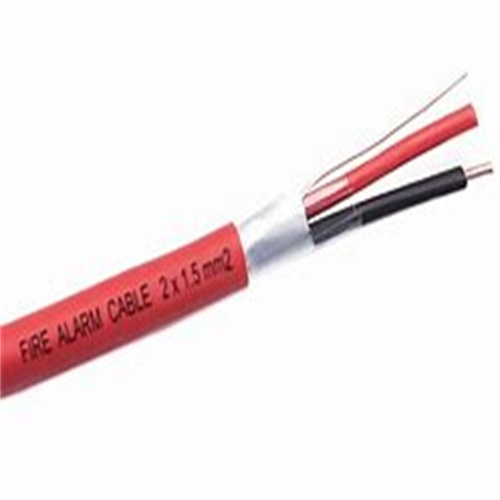
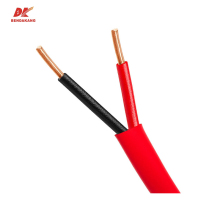
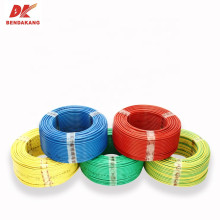
Security Fire Alarm Cable
Options:
- 0.5-10mm2
Get Latest Price
You might also like



Basic Info
| Model No. | Alarm cable |
|---|---|
| Brand Name | BDK |
| place of origin | China |
| species | Insulated |
| Conductor material | Copper |
| Conductor type | Stranded, Solid |
| Insulation material | Pvc, Fiberglass |
Show More
Product description
Security Fire Alarm Cable
I. Specifications and Types
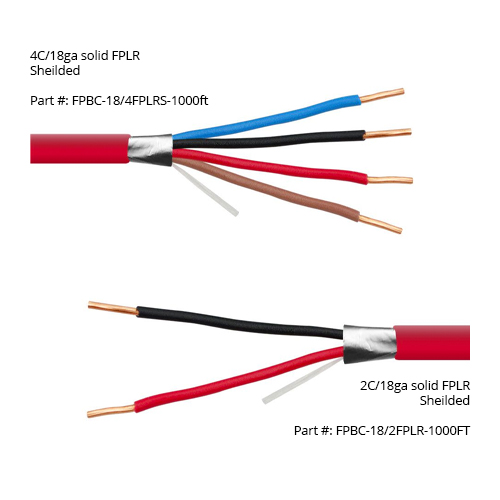
Security fire alarm cables are multi-core electronic cables designed specifically for fire alarm, security monitoring, and low-voltage control circuits.
?
Fire Resistant Cable Types are primarily categorized as follows:
By Installation Scenario:
FPLR (Fire Power Limited Riser): Suitable for vertical installation (such as wiring between floors), compliant with UL 105°C/300V standards, and lower cost.
FPLP (Fire Power Limited Plenum): For horizontal installation (such as in suspended ceilings or ventilation ducts), certified with UL 75°C/300V, offering higher fire resistance and a smoke density transmittance of ≥60% during combustion.
?
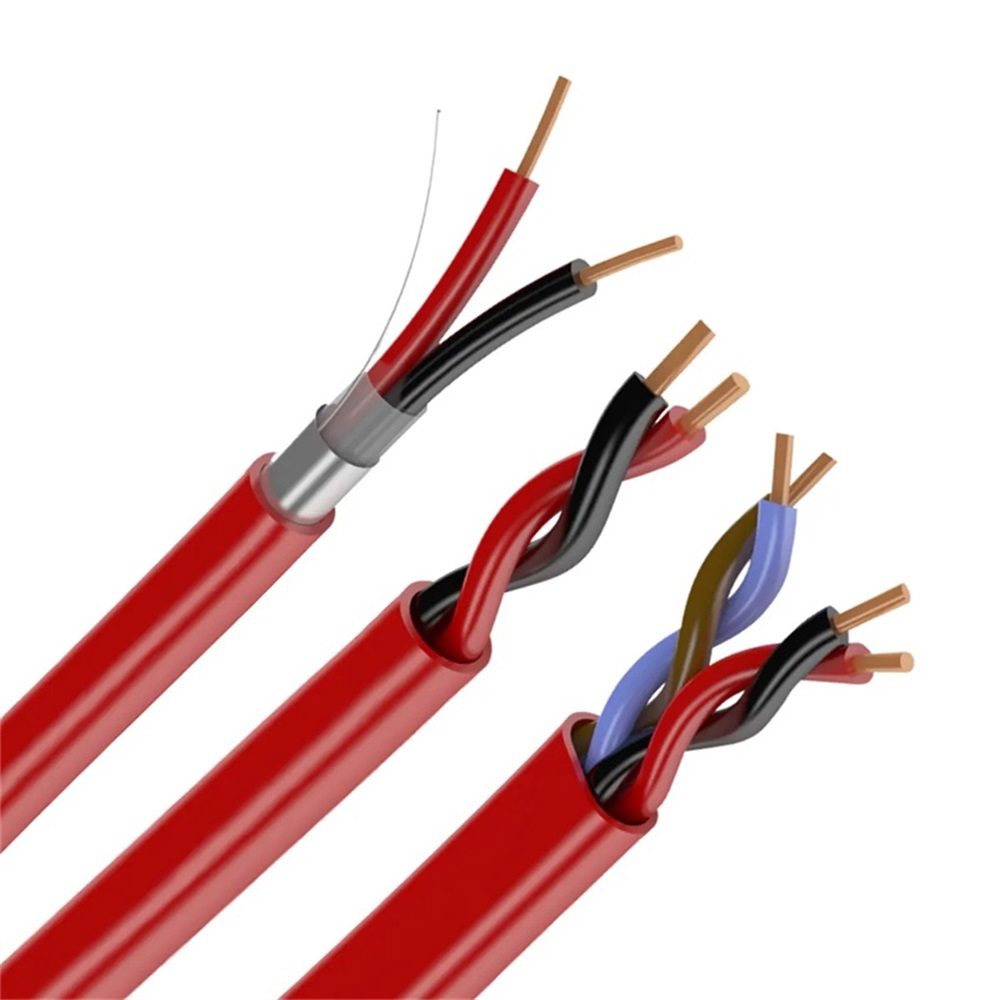
By Shielding Structure:
Unshielded: Suitable for environments with low electromagnetic interference, such as conventional alarm systems in stand-alone buildings.
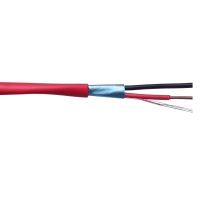
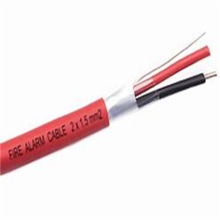
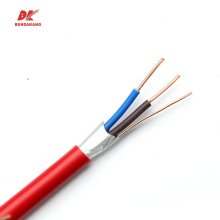
Shielded: Utilizes an aluminum foil shield to reduce external electromagnetic interference and ensure stable signal transmission. Suitable for sensitive locations such as data centers and hospitals. Conductor Specifications:
Conductor diameters range from 18AWG (0.0403 inches) to 12AWG (0.0808 inches), with cross-sectional areas ranging from 0.82mm2 to 3.31mm2, supporting diverse load requirements.
II. Performance Parameters
Electrical Performance:
Rated voltage: 300V, can withstand 300W transient surges, ensuring stable system operation.
Conductor resistivity: ≤0.017241Ω·mm2/m (20°C). 18AWG cable resistance per 1000 feet: ≤6.5Ω, 12AWG: ≤1.8Ω, minimizing voltage loss.
?
Fire Resistance and Flame Retardancy:
Compliant with IEC 331 and BS 6387 standards, maintaining a circuit integrity of ≥95% after a flame temperature of 950°C for two hours.
Flame retardancy meets BS 5839-1:2003 and IEC 60332-3 CAT CWZ, with a flame spread rate of ≤1.5m/min.
?
Environmental Protection and Safety:
Low-smoke zero-halogen (LSZH) sheath, acid gas emissions ≤ 5mg/g (BS EN 50267), smoke transmittance ≥ 60% (BS EN 50268), no toxic gas release.
RoHS compliant, lead content ≤ 0.1%, cadmium content ≤ 0.01%.
?
III. Material Features
Conductor:
Made of annealed pure copper with a copper content ≥ 99.99%, stable conductivity, strong oxidation resistance, and long-term heat-free operation.
Insulation:
Silicone rubber or low-smoke zero-halogen polyolefin, heat-resistant to 125°C, dielectric strength ≥ 20kV/mm, to prevent short circuits.
Shield:
Aluminum foil shield with a bare tinned annealed copper ground wire effectively suppresses electromagnetic interference and improves signal quality.
Sheath:
LSZH material is oil-resistant, acid-resistant, alkali-resistant, and UV-resistant, with a service life of ≥ 30 years, suitable for harsh environments.
?
IV. Advantages of Fire Alarm Cable
High Reliability:
Fire resistance ensures continuous operation of the alarm system during a fire, buying critical time for evacuation and fire rescue.
?
Environmentally Friendly and Safe:
Low-smoke, halogen-free properties reduce the risk of asphyxiation in fires, complying with global environmental trends and avoiding customs detention or return shipments.
?
Strong Anti-Interference Capability:
Shielded cable effectively isolates external electromagnetic interference, ensuring signal transmission stability and reducing false alarm rates.
?
Easy Installation:
The cable is flexible and easy to bend, with a minimum bend radius of ≤6 times the outer diameter. It supports direct conduit installation, reducing construction costs.
?
V. Fireproof Wire Specification Compatibility and Installation Scenarios
Specification Selection:
Conductor Cross-Sectional Area: Select according to the load current. For example, 18AWG is suitable for a single smoke detector circuit, while 12AWG is suitable for a multi-device linkage system.
?
Number of Cores: Two cores for single-phase circuits, four cores for three-phase, four-wire systems.
Voltage: 300V for control circuits, 0.6/1kV for main power transmission.
?
Installation Scenarios:
Commercial Buildings: Fire alarm systems in high-rise office buildings and shopping malls, connecting control panels, detectors, and alarms.
Industrial: Safety monitoring systems in chemical plants and nuclear power plants, designed to withstand extreme environments such as high temperatures and corrosion.
Transportation Hubs: Signaling and communication systems in subway tunnels and airport terminals, meeting the FAA's 60-minute power-on requirement.
Special Locations: Low-voltage control circuits in data centers and hospitals, ensuring continuous operation of critical equipment.
?
Installation Requirements:
Avoid contact with high-temperature pipes and highly corrosive substances. Bend radius must meet standards (e.g., 6 times the outer diameter).
When laying cables through conduit, the inner diameter of the conduit should be ≥ 1.5 times the outer diameter of the cable to prevent mechanical damage.
Specialized cold-pressed terminals are used at the joints to ensure contact resistance is ≤ 1.1 times the resistance of a conductor of equal length.
Fire alarm cable
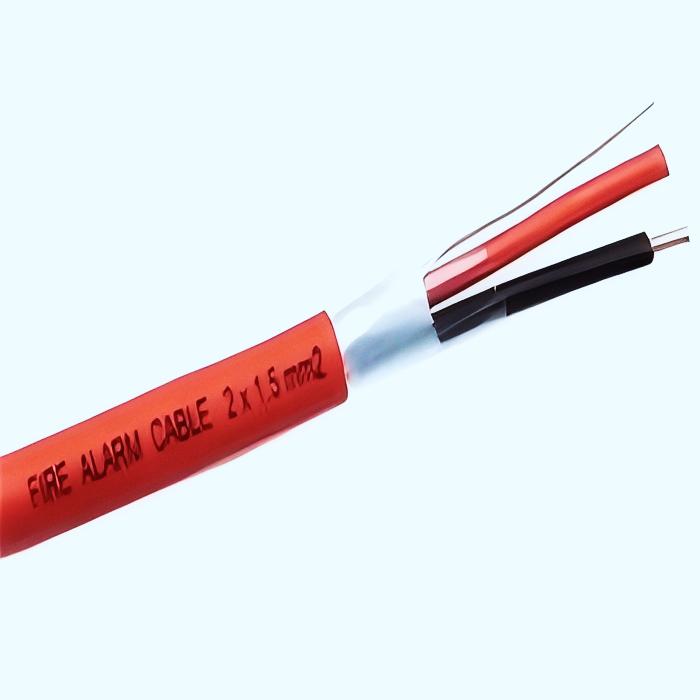
Rated Voltage: 300V
Conductor:??Class 1 or Class 2 copper
Insulation: Fire Retardant PVC
Shield:?Aluminum Foil&Tinned Copper or N/A
Sheath: Fire Retardant PVC
Others:?Armored Cable and other property?Low Voltage Power Cable?can be available
Application: Those Fire Cable?are?used in high rise buildings,schools and educational institutions, hospitals, etc. for the?connection with security systems like smoke detectors,?emergency lighting, exit signboards and fire command center.
?
BDK is a leading Electrical Cable,? Electric Power Cable manufacture, the annual turnover reach USD 0.3 billion.We are the qualified supplier of State Power Grid, China Southern Power Grid and Vanke Group, Country Garden,ect and other large, medium partners around the world.

?



Video
Power Cable production
Power Cable production
Power Cable production
Security Fire Alarm Cable
Options:
- 0.5-10mm2
Get Latest Price
Send your inquiry to this supplier
You may also be interested in
Product Categories
New products




Send Inquiry
Product Alert
Subscribe to your interested keywords. We will send freely the latest and hottest products to your Inbox. Don't miss any trade information.
Subscribe
Your use of this website constitutes acknowledgement and acceptance of our Terms & Conditions.
Copyright ? 2009-2026 Bossgoo Co., Ltd. All rights reserved.
